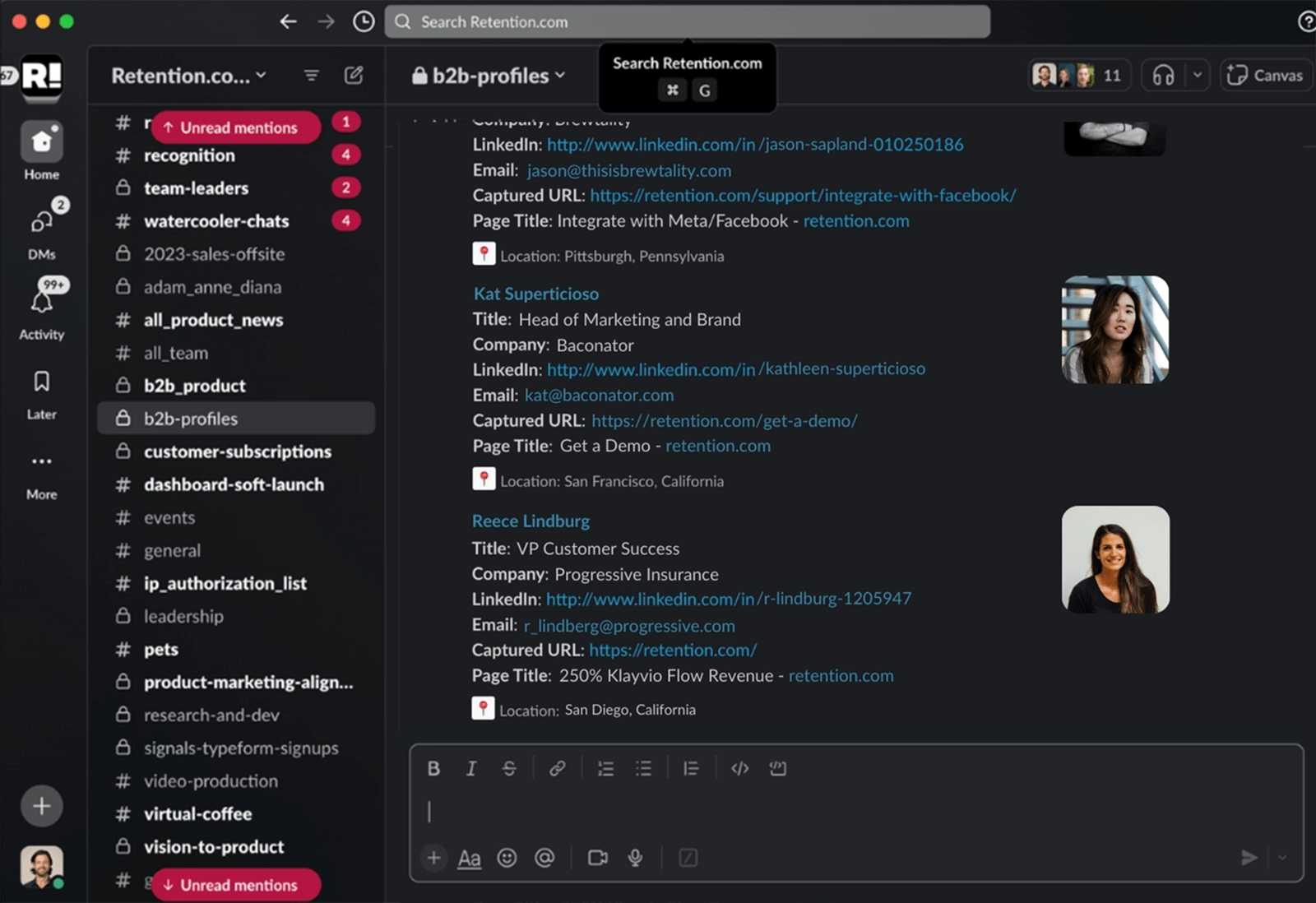
SAN FRANCISCO — October 14, 2025 — Warmly, the leader in AI-powered go-to-market tools, today announced the launch of its Marketing Ops Agent, a first-of-its-kind platform that combines AI enrichments and real-time signal monitoring to automatically build, update, and prioritize a list of the highest-value accounts and contacts for marketing teams.
The launch marks a major milestone for Warmly, which has grown ARR 5× since its Series A and now powers marketing teams for high-growth companies like Workboard, New Relic, and Conversion.ai.
“Traditionally, the process of building a target list can take weeks, involves stitching together the results of several different and complex tools and requires constant manual tweaking. And often, the target list you end up with is still sub-optimal and likely out of date before the end of the quarter.” Said Alan Zhao, Co-Founder and CPO of Warmly. “We fix that problem by giving marketers one, easy to use tool that builds a real-time list of accounts and people that actually want to buy from you.”
The End of Spray-and-Pray: Welcome to “Lean Pipeline”
B2B teams are stuck in a vicious cycle of trying to hit inflated pipeline targets with more ad spend, more outbound, and more tools, only to see sales rate continue to decline, revenue flatline, and the cycle to continue with an even higher pipeline goal.
Warmly’s Lean Pipeline approach breaks that cycle. Marketers don’t need to chase massive pipeline targets, they can focus only on the high-fit accounts and the people with intent to buy.
”Warmly sourced MQLs closed at a 50% higher rate and 30% faster than our other sources” - Stephanie Armand, Sr. Rev Ops Manger, Qase
The Super Marketer
The Warmly Marketing Ops Agent is the first tool built for a new generation of “Super Marketers,” the next $500k+ earners in tech.
"The Super Marketer will become the most valuable asset of high-growth organizations," said Maximus Greenwald, Co-Founder and CEO of Warmly. "Our platform empowers these professionals with the tools they need to identify and convert the right opportunities, and transform marketing into their company’s primary revenue driver."
This new generation of marketers will orchestrate sophisticated, highly-targeted, omni channel campaigns at scale at hyper speed. They’ll be able to single-handedly generate 75%+ of a company's total pipeline by leveraging AI tools like Warmly.
“We were able to replace 4 tools and an entire role within our GTM org with just the Warmly Mar Ops Agent.” - David Chase, CEO, Workboard
In the AI era, pipeline quality is the ultimate competitive advantage. Warmly’s Marketing Ops Agent is available today for all customers and integrates seamlessly with existing Warmly signals, and orchestration workflows.
Are you trying to figure out if 6sense is the right sales intelligence software for your marketing and sales team?
In this honest 6sense review, I’ll go over the platform's features, usability, data quality, integrations, and even customer support to help you make an informed decision.
TL;DR
Range of features: 8/10. 6sense offers a good range of features for sales and marketing teams, most notably their dynamic audience-building and visitor identification software. Despite that, the platform does not provide contact-level data of website visitors and does not have live engagement features.
User interface and usability: 5/10. The platform has a steep learning curve that has been confirmed by multiple users of the software. Building automations with the tool’s orchestrator is not easy in the beginning, either.
Data quality: 7/10. There are negative reviews regarding intent data inaccuracies and duplication issues, but there are still some customers who are satisfied with the tool’s keyword research intent data and other signals.
Integrations: 7/10. 6sense has a good range of native integrations, partnerships, and a whole bunch of other integrations that could already be in your sales stack – but some users have reported difficulties setting up the integrations.
Customer support: 8/10. The platform offers best-in-class account management and customer success, but some of the customer support reps have shown poor product knowledge, according to G2 reviews.
Pricing model: 5/10. 6sense does not have transparent pricing, and 3rd party data shows that their average cost is higher than alternatives on the market – making it too expensive for SMEs. The tool has a free plan but with only 50 credits to spend monthly.
Average rating for 6sense: 6.6. No pun intended.
6sense Overview
6sense is an AI-powered ABM platform that combines B2B data with intent signals to automate your ABM workflows.
The platform can identify the accounts that are most likely to buy so your sales reps can react in time.
The tool has gained recognition for its advertising capabilities, which help you build retargeting campaigns based on its intent data.
I think of 6sense as a platform that is ideal for medium-to-large enterprises looking to Identify surging accounts on their website so their sales team can reach out to them and nurture relationships.
💡 Since this review aims to analyze 6sense in good detail, I’ll be giving my unbiased ratings on the platform’s features, user interface, data quality, integrations, and customer support.
Let’s dive deeper into the software’s sales features: 👇
6sense’s Core Features
1. Get access to in-depth B2B intent data
6sense collects intent signals from multiple sources (the platform claims it analyzes 500B+ intent signals monthly), such as website visits, keyword searches, and engagement patterns of prospects.
This data helps sales teams better understand what their target accounts are researching, allowing them to pinpoint the ones most likely to convert.
Sales teams can then create relevant and highly personalized campaigns accordingly to capture the demand.
2. Lead prioritization dashboards
6sense’s lead prioritization dashboards provide your sales reps with a personalized, 360-degree view of all their deals, accounts, leads, etc.
As a result, your sales reps can identify opportunities in real-time and gain a deep understanding of which accounts to focus on and how.
Moreover, all the essential information is constantly updated, meaning that you’ll always have the most relevant and accurate data.
3. Dynamic audience building
6sense provides your team with 80+ segmentation filters that let you quickly define your ICP and identify accounts that best fit it.
It combines proprietary data with your CRM data and the intent signals it picked up to create detailed account lists that enable you to prioritize high-value accounts.
The software dynamically adjusts account lists by moving accounts to different audience segments based on relevant real-time factors such as changes in their buying stage, annual revenue, keywords they are researching, etc.
4. Marketing orchestration
6sense’s platform lets you create dynamic, always-on campaigns that react to buyer behavior and automatically update audiences as they move through the buying journey.
Your team can automate data enrichment, contact acquisition, audience building, and regular syncs between your sales platforms to save time and keep lead data up-to-date.
Rating: 8/10.
6sense offers its customers a comprehensive range of features for sales teams, such as its visitor identification software, lead prioritization, and dynamic audience building for advertising.
However, the solution can only identify companies visiting your website and not actual stakeholders (i.e., who exactly is visiting your website).
The platform also does not have real-time engagement features, such as some 6sense alternatives on the market (e.g., an AI chat) and has no integration with for automated outreach (only with LinkedIn Ads).
For example, customers of the platform are struggling to identify who is engaged with their company when dealing with larger accounts.
‘’We also do not have contact level reporting of who is actually engaged with our company, which can be challenging when engaging larger accounts.’’ - G2 Review.
6sense’s User Interface: Is It Easy To Use?
6sense’s platform does have a lot of functionality when it comes to automations, reporting, and marketing automations – and all of that comes with a slight learning curve for even seasoned sales professionals.
The software’s numerous features are packed into a rather clunky interface, which even satisfied customers of the platform are criticizing in their G2 reviews.
‘’What I dislike about 6sense Revenue AI for Marketing is that it can be complex to navigate initially, requiring a learning curve to fully leverage all its features.’’ - G2 Review.
When it comes to the platform’s automations with their orchestrations, customers of the platform also note that it has been more difficult for them than they originally suspected.
‘’Orchestrations and workflows with 6sense data were more difficult to implement than expected.’’ - G2 Review.
Rating: 5/10.
As reviewers have pointed out, you’d need to spend some time learning how the platform works so you can fully utilize its marketing and sales features.
In fact, when I opened their G2 profile, ‘’learning curve’’ and ‘’difficulty’’ were part of the 4 most common complaints of customers.
6sense’s Data Quality
6sense gives you access to buyer intent and engagement data with bonus predictive analytics into which stage of the buying journey your prospects are.
But just how accurate is this data?
I was able to find 6sense customers on G2 who have reported issues with the platform’s predictive analytics and intent data, which is described as ‘’directional, and not a crystal ball.’’
‘’From an intent perspective, it is not the end all be all or the crystal ball. It is directional. Also, I do find that the predictive model is generous. For example, if an account hits one of our campaign landing pages, it is suddenly in the 'purchase stage', and we often find that rarely means that an account is ready to send us a purchase order!’’ - G2 Review.
I also found some customers who complained about the tool’s data duplication issues, which has resulted in them having trouble with data reliability.
‘’Data can be a bit cumbersome, and we've had problems with data reliability and creation of duplicates.’’ - G2 Review.
On the positive side, there are customers of 6sense who have massively improved their sales pipeline by tapping into intent data, such as keywords and categories.
‘’6sense has been great in helping us identify segments based on key intent features such as keywords and categories. As a product marketer, it is really important we can identify the ICP and make sure the revenue org can clearly engage with their target accounts based on the topics and keywords they are searching for.’’ - G2 Review.
Rating: 7/10.
Despite 6sense’s negative reviews regarding their intent data inaccuracies and duplication issues, there are still some users who are satisfied with the tool’s keyword research intent data and other signals.
My problem with 6sense, similar to platforms like ZoomInfo, is that the tool’s visitor identification software reveals only companies and not individuals.
Good luck prospecting accounts like ‘’Microsoft’’ or ‘’Meta’’ landing on your website.
6sense’s Integrations
The platform integrates with various sales, marketing, and productivity platforms to centralize and maximize your existing sales tech stack so you can create more engaging campaigns with deeper insights.
The platform offers native integration with their partners: Outreach, Gong, Salesforce, and Salesloft, on top of their integrations with tools like Bombora for 3rd party intent signals.
You can also expect to sync your data with other productivity platforms, including LeanData for AI-powered insights and Reachdesk for perfectly-timed gifting to prospects.
However, customers of the platform have noted that integrating the tool with their existing systems has been challenging for them.
‘’Additionally, integrating it with existing systems can sometimes be challenging.’’ - G2 Review.
Rating: 7/10.
Despite 6sense’s native integrations, partnerships, and a whole bunch of other integrations that could already be in your sales stack – I gave the platform’s integrations a 7 instead of an 8 due to the difficulty of integrating some of the tools with 6sense.
6sense’s Customer Support
Even though 6sense does not disclose what customer support you can expect on its pricing page, I was able to get a good idea of the tool’s customer support from G2 reviews.
Users of 6sense are generally positive about the platform’s level of customer support, noting that they were assigned a customer success manager who has been helping them and responding quickly to their requests.
‘’Even though the tool can be quite daunting because of its depth, having a CSM that can help support us is so helpful. Definitely helpful to just send a quick note and get a response right away.’’ - G2 Review.
This positive perception has been confirmed by both mid-market and enterprise customers of the platform, claiming that they’ve had a good experience with customer support.
‘’We have had great customer support and feel like 6sense is always willing to dive in and collaborate to come up with new ideas or solutions we need.’’ - G2 Review.
Despite that, another Enterprise customer of 6sense mentions that the tool’s regular customer support can be a hit or miss with less product knowledge than their customer success team.
‘’Also, while 6Sense's customer success team is top-notch, their customer support is a bit more hit or miss. Some support reps are real product experts and zero in on solutions to issues quickly. Some… not so much.’’ - G2 Review.
Rating: 8/10.
Even though most users are satisfied with the level of customer support that they were provided on 6sense – it seems like some customer support reps do not have the necessary product knowledge to handle more complex issues.
6sense’s Pricing Model: Does It Provide A Good Value For Money?
6sense offers a free plan that provides:
50 credits/month.
Buyer Discovery.
Contact & Company Data.
Alerts.
List Management.
Chrome Extension.
If you need more, you can upgrade to one of three plans:
Team: Includes everything in Free plus:
Technographics
Psychographics
Web, CRM, and SEP Apps
Add to CRM/SEP
Dashboards
Growth: Everything in Team plus:
6sense Intent (Keywords)
3rd Party Intent
Corporate Hierarchy
Prioritization Dashboards
Enterprise: Everything in Growth plus:
Predictive AI Model
AI Recommended Actions
CRM & MAP Activity
6sense doesn’t disclose prices on its website, so you’ll have to contact its sales for more details.
However, Vendr also provides some helpful insights into 6sense’s pricing policy:
Customers are required to enter into a 2-year agreement with 6sense, a commitment that yields high retention.
In addition, it's important to highlight that potential costs may arise due to usage/overages, upgrades, or downgrades.
Finally, according to Vendr’s data, the average 6sense contract value is$56,762/year.
Rating: 5/10.
The tool does not disclose its pricing, but we were able to find that 6sense is on the higher end of the pricing range when compared to other alternatives on the market.
I do like the fact that the platform has a free plan, but you’ll run out of the 50 credit allowance in a matter of days if not hours.
How Does 6sense Compare To Alternatives On The Market?
💡 Check out our in-depth comparison of 6sense vs. ZoomInfo, where we cover the 2 sales intelligence giants in more detail.
What Are Customers Saying About 6sense?
Throughout this 6sense review, I’ve been showing you some of the users’ opinions on the platform – but let’s dive a bit deeper.
TL;DR: 6sense boasts a highly responsive support team, good segmenting accuracy, and a configurable interface. Despite data, customers of the platform report issues with 6sense’s data exports, limited persona targeting and the cost of the software.
Moreover, its persona targeting is highly limited compared to alternatives on the market.
What users love about 6sense:
Good segmenting accuracy with an interface that can be customized.
Ability to view account engagement and gain insights into their current buying stage.
Highly responsive customer support team and excellent account management.
There were some restrictions in ways you could filter or parse out data for particular programs, which made it, at times, difficult to pull and analyze data. Though it was nice having an optimization team to help, it would've likely been more convenient if there were tools in the platform to help with optimization ideas so you didn't need to join a call when looking for optimization help. - G2 Review.
The export of segments to platforms such as Google Ads and LinkedIn Ads is limited, and getting lots of them for exporting more segments is really expensive. - G2 Review.
Common complaints about 6sense:
Persona targeting is described as limiting with no role or title-based matching.
Limited export of segments to platforms like Google Ads and LinkedIn Ads.
The platform has been described as expensive and not affordable for smaller businesses.
Considering the high degree of configurability for account and intent attributes, persona targeting is shockingly limiting, with no true role or title-based matching. Targeting enterprise companies based solely on persona makes for a lot of waste. Other tools are doing exact title matching and have been for a few years. We've had to purchase additional tools to help with this layer, which means we can't launch ads through 6sense either. - G2 Review.
Verdict: Is 6sense Really Worth It?
So far, I've rated 6sense:
Range of features: 8/10.
User interface and usability: 5/10.
Data quality: 7/10.
Integrations: 7/10.
Customer support: 8/10.
Pricing model: 5/10.
Which gives me an average rating of 6.6/10 for 6sense.
To summarize:
6sense is the ideal choice if you:
✅ Are looking for good B2B intent data coverage, especially in the US region.
✅ Need a reliable marketing automation solution.
✅ Want a platform that can integrate with your advertising channels to create highly targeted campaigns.
6sense isn’t the best option if you:
❌ Are looking for a more budget option, as 6sense is more expensive than some of the other alternatives on the market.
❌ Need more website visitor identification functionality, such as contact-level data.
❌ Need more first-party intent data to identify and reach out to warm prospects.
Looking For A 6sense Alternative?
Despite 6sense’s range of features, good range of integrations and a large library of B2B intent data, some customers are still finding faults with the product’s data quality, pricing model, and ease of use.
Enter Warmly (that’s us) – a signal-based revenue orchestration platform that provides a wide range of features designed to:
Capture warm leads that visited your website (first-party data).
Identify the hottest prospects from those visitors.
Automatically engage and nurture them, helping your sales reps to successfully convert them.
Let’s get a closer look at the functionality that makes Warmly an attractive alternative to 6sense for sales teams: 👇
Our platform can identify both companies and the individual profiles that are browsing your website.
As a result, your reps can focus their efforts on the right stakeholders from the get-go.
With Warmly, you’ll get another ace up your sleeve.
Once it identifies website visitors, the platform proceeds to enrich each visitor with:
B2B data (email address, company name, phone number, industry, size, technographic, etc.).
First-party intent data (details of your visitors’ website sessions, such as visited pages, recurring visits, etc.).
Third-party intent data (insights into visitors’ entire digital buyer’s journey, including visits to competitors’ websites, job change intent, etc.).
This combination of first- and third-party intent data enables you to identify the leads that are most likely to buy right now as Warmly picks up the buying signals they’ve left throughout the web—on your website and beyond.
Your sales reps will be able to recognize who your hottest leads are right now and design tailored strategies for reaching out to them.
Why Is Intent Data Important?
Trying to sell a water bottle to someone who just walked out of their office isn’t the same as selling a water bottle to a runner who just finished a workout.
Understanding intent signals and recognizing them in time lets you:
Qualify and score leads with greater precision and easily identify the hottest leads.
Reach out when their interest level is at its peak.
Create a hyper-personalized approach for each lead based on the contextual insights you have at hand, like which pages they visited, what they searched for, etc.
This helped Behavioral Signals shorten its sales cycle by 50-90% and source nearly $7M in its pipeline.
Platforms that omit intent data from their offering slow your lead generation efforts from the get-go, leaving you without one of the most powerful weapons in sales reps’ arsenals.
2. Build Targeted Lead lists With Coldly
We at Warmly have recently included a static B2B database, Coldly, to help users build highly targeted lead lists more efficiently.
Coldly holds data on 200M+ accounts and contacts worldwide, in addition to having more than 25 built-in B2B data filters and the option for creating customized filters to fit specific business needs and industries.
Moreover, since the data is refreshed daily, you can have peace of mind that all your essential B2B data is accurate, relevant, and up-to-date.
You can do anything from building contact lists to automatically enriching your CRM contacts without spending hours on this.
3. Streamline Sales Engagement Processes
Warmly’s automation features are by far one of the things most customers love about the platform.
Warmly uses intent signals it picks up to build complex workflows on top of them, enabling you to reach out to all the right leads at the best possible time.
It provides several automation features, including:
Orchestrator, which lets you automate email outreach. The Orchestrator is highly configurable, meaning you can set up all the important parameters as you see fit, including:
The action that triggers the workflow (lead matching your ICP lands on your website or a website visitor comes back to your pricing page).
Filters that define which companies and individuals should be included in the workflow (these include everything from company size and industry to job position and seniority, etc.).
The course that the workflow should take (send a contextual email, a personalized DM, or a connection request).
This capability solves for time-to-lead, while SDRs can take over ones that respond and provide a personalized experience.
The AI-powered prospector prevents quality leads from falling through the cracks simply because you didn’t have a sales rep on hand.
💡Note: You will need to be on one of Warmly’s paid plans to gain access to AI Prospector. For ARC, the ROI was 200% over 6 months.
AI Chat, which is an AI-driven chatbot that can be trained to:
Qualify leads.
Answer their questions.
Book meetings.
Offer relevant collaterals.
Engage leads.
Lead routing, which lets you set up real-time Slack notifications that will alert the adequate sales rep whenever a lead matching certain criteria lands on your website or takes a high-intent action.
The combination of these automation features ensures that:
Every high-value lead will be engaged.
Your sales reps will have more time to focus on things that matter than most rather than act as surveillance guards on your website 24/7.
4. Live Video Chat
Engaging your leads while they’re still hot can make the difference between a successfully closed deal and an opportunity that is forever lost.
With Warmly, you won’t have to worry about that, as its Live Video Chat feature lets you engage leads while they’re still visiting your website.
In the “Warm Calls” section of Warmly’s dashboard, your sales team can see who’s visiting your website right now and monitor their session in real-time.
Once you detect a high-intent lead based on Warmly’s insights or a visitor matching your ICP, you can engage them in a video chat immediately.
Alternatively, you can rely on automated lead routing to notify reps whenever a high-value lead ends on your website.
This allows you to monitor their website interactions and hop on a call when they assess the time is right.
Micro: Starts at $333/month when billed annually and adds unlimited seats, 5,000 monthly visitors revealed, first-party intent signals, alerts, and access to Warmly’s extensive database of B2B contact data.
Starter: Starts at $12,000/year, everything in Micro, plus 10,000 monthly visitors, third-party signals, AI Chat, and CRM syncs.
Business: Starts at $19,000/year for up to 10,000 visitors or $28,000/year for up to 75,000 visitors, everything in Starter, plus second-party signals, sales orchestration, and lead routing.
Enterprise: Starts at $30,000/year, lets you identify a custom number of visitors, includes everything in Business, plus custom signals and warm calling.
How Does Warmly Compare to 6sense?
6sense is an excellent option for your business if you are looking for predictive analytics, keyword identification and site heatmaps.
Warmly, on the other hand, shines in finding and engaging prospects who are looking to buy and are likely to respond to your outreach.
Our platform might not have predictive analytics into where customers are in their buying journey or intent data from keywords, but we offer:
Website de-anonymization signals at the contact level.
Automated email retargeting.
Automated DMs retargeting.
Live session replays.
Chat video messaging so you can contact your prospects as they are browsing through your pages (e.g., pricing page).
Find Out Who Your Warmest Leads Are With Warmly
If you’re looking for a purely ABM platform with solid intent data, 6sense might be the way to go for your organization.
The platform’s capabilities of detecting buyer intent on your website are significantly limited compared to Warmly's, as they do not reveal contact-level information.
This limitation also affects 6sense’s marketing automations, which cannot be fine-tuned to engage only the warmest prospects—which your company is mostly interested in.
With Warmly, all that changes.
Our revenue orchestration platform helps you to identify website visitors (to the contact level), detect the hottest leads among them, and engage them via automated outreach sequences perfectly tailored to each lead.
You’ll be able to identify that Joe from Microsoft has been browsing your pricing page and then reach out to him – or why not right on your pricing page with a chatbot or video chat?
If you want to be able to do that, then you can try Warmly for free to start building a steady, warm pipeline in minutes.
Or, book a demo with our team for a personalized tour of all of Warmly’s capabilities.
AI marketing agents are quickly becoming the secret weapon behind some of the smartest campaigns out there.
When it comes to marketing agents, we're not just talking about tools that help.
We’re talking about AI that acts - analyzing data, building strategies, generating content, and making decisions in real time.
If that sounds futuristic, well… it kind of is. But the wild part? It’s already happening.
Teams everywhere - from scrappy start-ups to enterprise giants - are starting to rely on AI agents to handle tasks that used to eat up hours.
The kind of work that used to take a full team, such as automated campaign creation, real-time audience segmentation, and instant performance insights, is now being handled by intelligent, always-on digital assistants.
In this article, I’ll walk you through what AI marketing agents actually do, the most powerful ways they’re being used, and which tools are leading the charge.
Let’s begin!
What Are AI Marketing Agents?
AI marketing agents are intelligent, task-oriented digital assistants powered by AI, designed to perform specific marketing functions autonomously or semi-autonomously.
Unlike traditional marketing tools that require constant manual input, these agents can take action, make decisions, and even adapt their behavior based on real-time data and feedback.
Think of them as mini marketers built with code.
They can write email sequences, A/B test landing pages, launch and optimize ad campaigns, track user behavior, and personalize customer experiences across channels.
Some are designed for one specific job (like optimizing subject lines), while others operate as full-blown strategists, capable of managing entire workflows with minimal oversight.
What sets AI marketing agents apart from traditional marketing tools is their ability to learn and improve over time.
They’re built on machine learning, large language models, and other smart tech, so they’re not just following a script. They’re constantly evolving based on what works and what doesn’t.
Today, they’ve already become more than just an isolated experiment. They’re mainstream. Marketing teams everywhere are treating them as an extension of their workforce.
How Are AI Marketing Agents Revolutionizing Marketing in 2026?
In 2026, AI marketing agents aren’t just helping marketers work faster. They’re actually changing the very nature of marketing.
We’re seeing a shift from reactive marketing to proactive, always-on engagement.
AI agents can detect patterns, predict outcomes, and respond in real time - something no human team could do at scale.
They enable hyper-personalization without burning out your content team. They reduce the guesswork in campaign planning. And they’re making it possible for smaller teams to compete with the big players.
From generating data-driven insights in seconds to running personalized ad campaigns across multiple platforms simultaneously, these agents are giving marketers superpowers.
They’re freeing up human brains for strategy, creativity, and connection - the stuff that really moves the needle.
What Are the Different Types of AI Marketing Agents?
AI marketing agents come in different shapes and specialties. Here are a few of the most common types:
Content generation agents - These tools write blogs, ad copy, emails, social posts, and more. Some can even match brand voice and tone on the fly.
Email marketing agents - Think AI that manages your list, crafts personalized emails, optimizes subject lines, and analyzes open and click-through rates—all without constant oversight.
Ad optimization agents - These handle everything from bidding strategy to A/B testing creatives, using real-time performance data to boost ROI.
SEO agents - Tools that research keywords, optimize content, track rankings, and suggest on-page improvements automatically.
Analytics & insights agents - These turn raw data into meaningful insights, surfacing what’s working, what’s not, and what to do next.
Chat & customer support agents - AI-powered chatbots that go beyond scripted responses, delivering helpful, natural-sounding interactions across touchpoints.
Some platforms even offer multi-agent systems - basically a team of AI agents working together across tasks, communicating and sharing data to make smarter decisions as a unit.
Now that we have that covered, let’s look at the most common use cases for AI marketing agents today.
Top 9 Use Cases of AI Marketing Agents
AI marketing agents are being used across nearly every area of modern marketing, but some use cases really stand out in terms of impact, efficiency, and scalability.
Let’s break down some of the most powerful applications today - the ones teams of all sizes are actively benefiting from.
1. AI Agents for Conversational Marketing & Customer Support
Customer support used to mean live agents and long wait times.
Now, AI marketing agents are powering conversational experiences that feel instant, human, and helpful, whether it's through chatbots, email responses, or voice interactions.
These agents can answer product questions, recommend solutions, upsell based on user history, and even troubleshoot basic issues 24/7.
They’re not replacing your support team but enhancing it, handling the repetitive stuff so your human agents can focus on high-impact conversations.
These chatbots are even more handy when it comes to marketing.
Namely, for marketers, this is a goldmine.
Every interaction is an opportunity to engage, delight, or convert.
With AI agents integrated into your website, CRM, and messaging tools, you can turn support into a proactive channel that drives loyalty and sales.
This chatbot agent is powered by an advanced NLP AI model that can be trained to perfectly fit your brand voice, business objectives, and its designated purpose.
You can train it on your relevant data to make sure it will maintain a consistent tone of voice while tackling a wide range of tasks, such as:
Engaging high-intent leads (e.g., leads that visit your pricing page and stay there more than 10s).
Qualifying leads by asking qualificatory questions (e.g., “What brings you here?”).
Offering relevant collaterals (e.g., a whitepaper on the impact of AI tools on marketing to leads who have visited the feature page of an AI-powered tool).
Answering their queries regarding pricing, features, or other relevant matters.
Booking meetings.
Looping in human SDRs when necessary.
Because it is powered by sophisticated AI, Warmly’s AI Chat can handle a much broader spectrum of actions than regular chatbots while ensuring that each lead interaction is contextual, relevant, and personalized.
The result?
Higher engagement, more booked meetings, and more closed deals.
2. AI Agents for Customer Journey Orchestration
This is where things start to feel like magic.
AI agents can now orchestrate entire customer journeys - from the first touchpoint to post-sale engagement - automatically adapting to individual behavior at every step.
It's like having a hyper-attentive and intelligent conductor directing each customer’s unique path through your funnel.
For example, if someone interacts with your website or engages with your content, the agent might follow up with a retargeted email or DM.
Moreover, the agent personalizes each touchpoint based on every lead’s unique data and preferences, ensuring that the messaging will resonate with them.
These AI agents pick up the high-intent leads Warmly detects on your website and add them to hyper-personalized outreach campaigns via SMS, or email.
They leverage the intent and B2B data Warmly has on each lead to personalize every message, going far beyond the usual first names and company names.
Instead, AI SDRs use more nuanced information, such as leads’ interactions with your website, research of competitors’ websites, etc., to craft compelling and engaging messaging.
Rather than rigid funnels, you get fluid, intelligent experiences that guide leads forward based on real-time behavior.
It’s a huge win for both marketers and customers - less friction, more value, higher open and response rates, and more qualified meetings.
3. AI Agents for Content Creation
One of the most popular and practical uses of AI marketing agents is content creation.
These agents can research, draft, and optimize content across formats, including blog posts, newsletters, social captions, product descriptions, and more.
They save marketers a massive amount of time while helping brands maintain a consistent voice and publishing rhythm.
But they’re not just spitting out generic text.
Today’s content agents understand tone, structure, and audience intent.
You can ask one to write a persuasive product intro for Gen Z buyers, and it will tailor the message accordingly.
Some can even perform SEO research, integrating relevant keywords and optimizing content for search rankings without requiring input from multiple tools.
What makes this use case especially game-changing is how it shifts content from a bottleneck to a growth lever.
Small teams no longer need to outsource or delay publishing schedules.
AI agents can produce first drafts in literal minutes, freeing up human writers to refine, strategize, and focus on higher-level storytelling.
4. AI Agents for Campaign Personalization
Honestly speaking, real personalization at scale used to be a dream.
Now, with AI marketing agents, it’s the default.
These agents can segment audiences in real time, customize messaging based on user behavior, and adapt campaigns as customer data evolves.
It’s like having a personal marketer for every contact in your database.
Warmly’s Orchestrator functions on that principle.
It monitors your website for high-intent leads that match your ICP criteria and includes them in tailored email and campaigns.
Let’s say someone visits your pricing page twice but doesn’t sign up.
Warmly’s Orchestrator agent can recognize this intent and trigger a personalized email with a special offer, a case study, or an icebreaker message without you lifting a finger.
Learn how the Orchestrator helped a LinkedIn marketing agency, Straightin, get $10,000 in revenue in just 2 weeks.
It’s not just automated. It’s contextual and relevant, increasing the likelihood of conversion.
The beauty of this use case is in the blend of automation and intelligence.
We’re moving beyond static drip sequences toward dynamic journeys that adapt to each user.
That’s a massive leap forward for customer experience, and it's why companies using AI for personalization are seeing higher engagement and retention.
5. AI Agents for Ad Campaign Management
Running paid campaigns across Google, Meta, LinkedIn, and TikTok?
That’s a full-time job unless you’ve got an AI ad agent doing the heavy lifting.
These agents can create ad copy, select visuals, test variations, optimize bidding strategies, and monitor performance in real time.
Rather than reacting to ad fatigue or overspending days later, AI agents spot trends and pivot fast.
They might pause underperforming ads automatically or shift budget toward top-performing creatives, all while keeping costs in check and ROI on the rise.
Some even suggest new campaign angles based on historical performance and competitor data.
This use case is especially powerful for performance marketers juggling multiple platforms.
AI agents act like your 24/7 campaign managers, always learning and optimizing. That means more wins, fewer wasted dollars, and a lot less stress.
6. AI Agents for Email Marketing Automation
Email has been around forever, but with AI agents running the show, it feels brand new.
These agents don’t just schedule blasts; they tailor content, adjust send times, craft subject lines, and segment lists based on behavior, engagement, and lifecycle stage.
Imagine having an agent that knows exactly when to send a re-engagement email to a dormant lead or one that notices someone clicked your demo link but didn’t book, then follows up with a persuasive nudge.
AI makes this kind of logic-driven engagement effortless and consistent.
What makes this use case stand out is its compounding effect.
As agents collect more data over time, they get better at timing, tone, and targeting.
That leads to higher open rates, more clicks, and better conversions.
For marketers who rely on email to nurture leads or onboard customers, this is a no-brainer upgrade.
7. AI Agents for SEO Optimization
SEO is one of those marketing pillars that demands a million little tasks, such as keyword research, on-page optimization, internal linking, meta descriptions, content updates… the list goes on.
AI SEO agents streamline all of it. They can audit your site, surface ranking opportunities, suggest improvements, and even generate optimized content based on search intent.
Some go even further by automatically analyzing your competitors, identifying keyword gaps, and recommending backlink strategies.
The best ones even integrate with your CMS to push updates directly, turning what used to be a painstaking process into a near hands-free experience.
The real power here? These agents never stop.
SEO isn't something you do once and walk away from—it’s ongoing. AI agents monitor fluctuations in rankings, adapt to algorithm updates, and fine-tune your marketing strategy in real time.
That’s a level of consistency and speed that’s hard to match without a dedicated (and expensive) SEO team.
8. AI Agents for Social Media Management
Managing social media can feel like shouting into the void, and keeping up with trends, platforms, and algorithms is a job in itself.
AI social agents help take back control. They can create post variations, suggest hashtags, schedule content at optimal times, and analyze performance across multiple channels.
But they’re more than just schedulers and auto-content generators.
Many are now trained on specific tones and voices, so they can write on-brand captions and adapt messaging based on the platform (e.g., casual on TikTok, polished on Social).
Some even monitor comments and DMs, surfacing the most important ones for human follow-up or responding instantly with helpful info.
This use case is especially great for lean teams that don’t have a dedicated social strategist.
With the right AI agent, you can stay active, relevant, and responsive without burning hours every week.
Plus, it gives you real-time insights into what your audience actually cares about.
9. AI Agents for Lead Scoring and Qualification
Your pipeline is only as good as your leads. And AI agents can now qualify, score, and prioritize them better than most humans.
These agents analyze behavioral data, firmographics, engagement history, and more to determine which leads are sales-ready and which need nurturing.
No more wasting time chasing cold leads.
AI agents can flag high-intent prospects the moment they hit key triggers like visiting your pricing page, downloading a whitepaper, or opening multiple emails in a short time.
They can also automatically assign leads to the right rep or segment, keeping your CRM squeaky clean and action-ready.
The best part?
These agents aren’t just rule-based - they’re predictive.
Over time, they learn what behaviors typically lead to a sale and get sharper at spotting them early.
That means your sales team spends more time closing and less time guessing.
The 4 Best AI Marketing Agents on the Market in 2026
There’s no shortage of AI marketing tools out there, but not all of them function like true agents.
The ones below don’t just give you data or spit out content - they take action, make decisions, and deliver results.
So, let’s look at the four best AI marketing agents in 2026, each serving a unique use case.
1. Warmly – For AI-Powered B2B Lead Qualification & Customer Journey Orchestration
Warmly acts as your outbound SDR but smarter and faster.
It identifies high-intent website visitors, qualifies them using detailed B2B and intent data, and instantly personalizes outreach - via email, or AI Chat.
It’s ideal for B2B teams looking to scale personalized sales outreach without scaling headcount.
In addition to its website traffic deanonymization, AI-driven chatbot, SDR agents, and the Orchestrator, Warmly also offers:
Warmly offers a free forever plan that allows you to reveal up to 500 monthly visitors, set up ICP filters to quickly identify high-quality leads, and automate basic lead routing.
If you need more, there are three tiers to choose from:
Data Only: Starts at $499/mo when billed monthly or $4,000 when billed annually, lets you identify up to 5,000 monthly visitors, first-party intent signals, alerts, and access to Warmly’s B2B prospecting database.
Business: Starts at $19,000/year for up to 10,000 visitors or $45,000/year for up to 75,000 visitors, everything in Data Only, plus third and second-party signals, sales orchestration, AI Chat, and lead routing.
Enterprise: Custom pricing, custom number of visitors, everything in Business, plus custom signals and warm calling.
2. Jasper – For AI-Driven Content Creation
Jasper is your go-to AI agent for content production at scale.
Whether you’re creating blog posts, product descriptions, or email copy, Jasper can generate on-brand content fast.
Its workflows and brand voice memory make it perfect for marketers who want consistent messaging across multiple formats and channels.
Its key features include:
Brand Voice - Jasper lets you lock in your brand’s tone, style, and messaging guidelines so every piece of content it generates stays on-brand.
SEO & Performance Mode - Integrated with tools like Surfer SEO and Grammarly, Jasper helps you create content that ranks and reads well. Its “Performance Mode” offers real-time suggestions to improve clarity, tone, SEO score, and conversion potential as you write.
AI image generation - Jasper includes options for creating compelling visuals to go with your content.
Pricing
Jasper.ai has 3 pricing plans:
Creator: $49 month/seat (1 user only).
Pro: $69 month/seat (up to 5 users).
Business: Custom pricing.
Its Creator and Pro plans have 7-day trials, so you can try them on for size before subscribing.
3. Mutiny – For Website Personalization & CRO
Mutiny is a conversion-focused AI agent that personalizes your website content based on visitor segments.
It automatically adjusts headlines, CTAs, and messaging depending on industry, size, or funnel stage.
It’s perfect for SaaS and B2B companies trying to boost conversion rates without hand-coding every variation.
Some of its best features include:
No-code website personalization - Mutiny allows marketers to personalize website content (e.g., headlines, CTAs, and copy) based on firmographics, behavior, or campaign source for different visitor segments without touching code.
Dynamic audience segmentation - Mutiny can identify who’s visiting your site and automatically group them into actionable segments like enterprise prospects, returning visitors, or high-intent leads.
A/B testing & predictive analytics - Mutiny’s A/B testing engine lets you experiment with different variations and then uses AI-powered insights to predict which version will drive better results.
Pricing
Mutiny doesn’t disclose prices.
You’ll have to book a demo or contact its team to get more details.
4. AdCreative.ai – For Automated Ad Creative Generation
AdCreative.ai is built for performance marketers who want high-converting ads without creative burnout.
The AI generates ready-to-launch ad creatives and copy for Google, Meta, and other platforms, then refines them based on campaign performance.
It’s a great choice for agencies or teams managing multiple paid campaigns.
Its key features are:
Generates ads at scale - AdCreative.ai automatically produces high-converting ad visuals and copy for platforms like Google, Facebook, Instagram, and LinkedIn. Just input your product or campaign details, and the AI generates dozens of ready-to-launch ad variations in minutes—great for testing at scale without designer delays.
Performance-based scoring system - Each creative comes with a predictive performance score powered by AI, so you can prioritize the versions most likely to convert.
Seamless integrations with ad platforms & CRMs - AdCreative.ai connects with tools like Google Ads, Meta Ads Manager, Zapier, and HubSpot, allowing you to push creatives directly to your campaigns or workflows.
Pricing
AdCreative.ai has four pricing plans:
Starter: Starting at $39 and going up to $189 depending on the number of ad downloads you want, includes 2 users and 1 brand, in addition to access to all the platform’s AI features.
Professional: Starting at $249/mo and going up to $499/mo, includes 20 users, 3 brands, and access to Pro feature toolkit.
Ultimate: Starting at $599/mo and going up to $1099/mo, includes 50 users and 10 brands.
Enterprise: Custom pricing, has custom limits and advanced security features.
Next Steps: Automatically Engage with High-Intent Prospects on Your Website with Warmly’s AI Agents
By now, it’s clear that AI marketing agents aren’t just helpful assistants.
They’re proactive, intelligent operators that are reshaping how modern teams work, tackling everything from content creation and ad management to email automation and customer journey orchestration.
And when it comes to putting this power to work right now, Warmly is the tool that stands out.
Its AI agents and chatbots are built to identify, qualify, and engage high-intent leads the moment they land on your site, keeping your pipeline moving while letting your team focus on closing deals.
So, if you’re ready to let your website work smarter - as your next ideal customer might already be there - you’ve got two easy next steps:
Book a demo to see exactly how Warmly’s AI agents work in your flow, or
Are you wondering if UnifyGTM is the right fit for your sales efforts or if you should look for an alternative solution?
We researched dozens of platforms, reviewed verified reviews on G2, and talked to sales and marketing leaders to build a list of the 10 best UnifyGTM alternatives in 2026.
This buyer guide covers each tool’s features, pricing, pros/cons, and use cases to help you make an informed decision.
Why Look For UnifyGTM Alternatives?
The lead generation platform has received praise for its ability to identify potential buyers, personalize outreach in email, and streamline your pipeline development.
Despite that, some users of the platform as well as our in-house experts have expressed concerns about the tool’s pricing model and identification capabilities. ⤵️
#1: The Pricing Model Does Not Fit The Budget Of Small Business Owners
The first drawback of UnifyGTM for us is how expensive it can get for small business owners.
A verified user review on G2 notes that their pricing model does not fit their budget and recommends the platform to include a lower budget option for smaller brands.
‘’The only major downside for me is the pricing. While it may be competitive with similar tools, as a small business owner, their pricing model doesn’t quite fit my budget. I would suggest offering a "small business tier" to make it more accessible for companies like mine.’’ - G2 Review.
#2: Limited Identification Features
The 2nd thing that we wanted to touch on was that UnifyGTM has limited functionality for de-anonymizing some visitors at the company level.
Even though the brand claims to offer personal-level de-anonymization, UnifyGTM can only do that through specially marked links via email.
Our in-house experts believe that this is both inconsistent and prone to failure.
#3: Limited GTM Plays
Last but not least, UnifyGTM limits the number of Plays you can run within the platform in the Growth plan (2) and the channels you can use.
Unify’s Plays are crucial for prospecting, qualifying and reaching out to prospects so such a limited number of workflows will push some organizations to look for the more expensive plans.
What Are The Best UnifyGTM Alternatives In 2026?
The best alternatives to UnifyGTM are Warmly, 6sense, and ZoomInfo with their signal-based revenue orchestration solutions and end-to-end sales management capabilities.
Here's a detailed breakdown:
ToolUse CasePricingWarmlySignal-based revenue orchestration: lead scoring, AI SDR, chat, and live lead engagement.Starts from $10,100/year.6senseIdentifying high-intent accounts using predictive analytics and dynamic segmentation.Free plan (50 credits/month); Paid plans: Team, Growth, Enterprise – all custom pricing. ⚠️ Average contract: $123,711/year (per Vendr).ZoomInfoEnd-to-end sales engagement and B2B data enrichment with ad targeting.No public pricing. Pricing depends on features, user licenses, and credit usage. Must contact sales.AlbacrossEU-focused lead enrichment with visitor identification and ad retargeting.Self-service: €79/month (billed annually); Growth: Custom pricing.KoalaProduct usage analytics and intent data to drive upsell and customer retention.Free plan (250 accounts); Growth: $750/month; Business: Custom pricing.Apollo.ioLarge B2B database access with verified contact info and outbound automation.Free plan; Basic: $49/user/month; Professional: $79/user/month; Organization: $119/user/month (billed annually).DemandbaseEnterprise ABM orchestration with personalization, retargeting, and sales insights.Custom pricing. Platform fee + flat user fee depending on scale.UpLeadVerified B2B contact discovery with downloadable leads and credit-based pricing.7-day free trial (5 credits); Essentials: $99/month; Plus: $199/month; Professional: Custom pricing.Seamless AIAI-powered contact data enrichment and prospecting automation with job tracking.Free plan (50 credits); Pro and Enterprise plans: Custom pricing.LushaB2B contact discovery and outreach with AI prospect recommendations.Free plan (50 emails, 5 phone numbers); Pro: $37.45/month; Premium: $59.95/month; Scale: Custom pricing (all billed annually).
#1: Warmly
Warmly offers the best alternative to UnifyGTM as it provides you with the most accurate, real-time, person-level de-anonymization data and signal tracking to help you identify your warmest leads and reach out to them immediately.
Disclaimer: Even though Warmly is our visitor identification platform, we’ll aim to provide an unbiased perspective into why it is the best UnifyGTM alternative on the market in 2026.
Warmly helps you identify individual and company accounts visiting your web pages and proceeds to enrich them with:
B2B data, including contact data, firmographic, technographic, CRM data, etc., that lets you figure out whether they’re a match for your ICP and high-performing accounts.
First-party intent data, which helps you understand how likely they are to buy based on their interactions with your website (visited pages, time spent on each page, recurring visits, downloaded collaterals, etc.).
Second-party data by monitoring your prospects’ and help you find all of the relevant stakeholders of the company.
Third-party intent data, which shows you their readiness to buy by providing actionable insights into their entire digital buyer’s journey, including search history, visits to competitors’ websites, job change intent, etc.
Your team can recognize high-intent accounts from the start—both at the company and individual levels – allowing sales development representatives to focus their efforts on them while they’re still surging.
Orchestrate Sales & Marketing Workflows
Warmly helps you put various parts of your sales and marketing operations on autopilot, enabling your sales development representatives to focus on what matters most—making strategic decisions and converting high-value leads.
Our platform’s Orchestrator enables you to automate and email outreach, as well as CRM enrichment.
Setting up automation within the Orchestrator is easy:
Step #1: Define the trigger that’s going to set off the workflow (e.g. a lead that matches your ICP lands on your website or takes a specific high-intent action like visiting the pricing page more than once).
Step #2: Define your ICP and high-value leads so that the Orchestrator knows who to target (filters you can use include company size, industry, location, tech stack, an individual’s job position, and many more).
Step #3: Specify an action it should take, which can include:
Sending a request and/or personalized DM.
Sending a contextual email.
Syncing relevant data to your CRM to keep your records fresh and relevant.
💡 Unlike UnifyGTM, Warmly offers lead routing functionality that ensures each company and individual account is handled by the appropriate sales rep while their interest is at its peak.
For example, you can set up Slack notifications to alert the right rep when:
An ICP-matching account lands on your website.
Asks a high-intent question in the chatbot.
Takes other relevant action.
As a result, no quality lead will fall through the cracks ever again.
Finally, you can also leverage Warmly’s AI Chat which helps you automatically engage and qualify leads. The chatbot will make sure to:
Ask contextual, relevant questions.
Give correct answers and offer collateral based on the account’s interests and preferences.
Book meetings, and more.
Engage High-Ticket Accounts Live
Being able to detect surging accounts in real-time is good, but it won't do you much good unless you can pounce on them at the right time.
Warmly solves this issue by including a feature that lets you engage leads live – while they’re still browsing your website.
Reps can choose between two options:
Text chat, meaning they’ll replace the chatbot and talk to prospects themselves.
Video chat that lets you hop on a video call straight from Warmly.
This way, instead of booking meetings for who knows when and risking missing the opportunity to convert high-intent leads, you can chat them up while they’re still hot and close more deals effortlessly.
A Daily-Updated B2B Prospect Database: Coldly
Warmly lets you get access to Coldly, a database with 200M+ accounts and contacts that gives your sales team an excellent starting point for prospecting.
Coldly includes all the B2B data your sales reps need to make initial contact, including:
Validated emails.
Phone numbers.
Profiles.
The database also provides 25+ B2B filters and customizable data filters that you can set up, enabling you to build highly targeted prospect lists in a few seconds.
Lastly, Coldly also has a browser extension that lets you scrape essential B2B contact data from any source on the web, including profiles, company websites, etc.
This way, your team will have both accurate contact data at their fingertips and the right tools to pick up buyer intent signals and set up workflows on top of them.
In addition to deep integrations with several lead intelligence and sales platforms, Warmly provides a Warm Bundle—partner discounts for over 25 sales, marketing, and GTM tools.
This way, you can access many relevant tools and combine them with Warmly at a fraction of their usual price.
What Is The Difference Between Warmly & UnifyGTM?
The biggest difference between Warmly and UnifyGTM comes down to data quality:
Warmly does person-level de-anonymization from any source. Our platform also quality checks all of our data and signals using 10+ data providers.
UnifyGTM claims to offer personal-level de-anonymization but can only do that through specially marked links via email. As we already mentioned, we believe this to be both inconsistent and prone to failure.
Warmly sets the standard for de-anonymization of data quality for the industry.
In fact, we invest over $1M per year on data providers and pass the return on that investment directly to our customers.
Access to different intent signals, such as contact level website de-anonymization, third-party research, and monitoring intent signals.
Access to different retargeting automations other than email, including DM retargeting, AI-powered customizable chatbots and Ad retargeting automations.
The ability to send leads to the right salesperson automatically and automatically notify them via Slack with a high-intent lead is active on your website.
A way to instantly engage with your highest intent leads with Warmly’s AI chat, as well as the ability to create a human-to-human connection through video chat on your site.
Access to a cold contact database, including emails, profiles, and phone numbers.
Access to live session replays.
A free email and database that comes with a <1% bounce rate.
A Bombora integration that lets you proactively reach out to your warm leads and track who’s researching terms relevant to your product and brand and get in front of them before your competitors do.
Access to advanced lead routing and round robin.
Pricing
Warmly’s pricing is modular and component-based and comes with a free plan that lets you identify up to 500 website visitors per month.
You can choose the components that best match the needs of your business, as components are priced by output and not just by a monthly fee.
There are 4 paid product plans that you can choose from:
AI Data Agent (Starts at $10,000/yr), which includes 10,000 credits, person-level web visitor de-anonymization (RB2B + Vector data), CRM integration, and access to our Coldly Contact Database.
AI Inbound Agent (Starts at $16,000/yr), which adds a native marketing outbound automation, domain warmup, and lead routing with custom CRM fields.
AI Outbound Agent (Starts at $22,000/yr), which adds automated signal-based outbound orchestration, AI chatbot & live video chat, email automation, automation, and email warmup.
Marketing Ops Agent (Starts at $25,000/yr), which adds AI-powered account scoring, AI enrichments and custom signals, buying committee identification, real-time buying intent signal tracking, and automatic updates across all enrichments, signals, account and lead lists.
➡️ Warmly’s pricing is ideal for larger SMB and MM companies with a growing or mature GTM motion with SDR, sales, and marketing functions.
Pros & Cons
✅ Accurate website visitor identification at both company and individual levels.
✅ Reveals who your hottest leads are right now.
✅ Personalized lead generation and outreach workflows.
✅ Real-time monitoring of visitors’ web sessions with options to engage them via an AI chat or video call.
✅ Transparent pricing model – even at the Enterprise level.
✅ Good range of integrations.
❌ Modular pricing.
#2: 6sense
Best for: Identifying surging accounts on your website that you can reach out to.
Similar to: ZoomInfo.
6sense is an AI-powered ABM platform that combines B2B data with intent signals to automate your ABM workflows.
The platform makes a good alternative to UnifyGTM with its ability to identify the accounts that are most likely to buy so your sales reps can react in time.
Features
The platform tracks 65M+ companies, 600M+ buyer profiles, and 35K+ technologies.
6sense detects website intent and connects it with the rest of the prospect’s customer journey online so you can recognize leads most likely to convert based on their level of intent.
AI-powered predictive analytics helps you predict customers’ future behavior so your sales team can prioritize high-intent leads in advance.
Standout Feature: Dynamic Audience Building
6sense provides 80+ segmentation filters that let you quickly define your ICP and identify the accounts that best fit it.
The software combines proprietary data with your CRM data and the intent signals it picked up to create detailed account lists that enable you to prioritize high-value accounts.
6sense then dynamically adjusts account lists by moving accounts to different audience segments based on relevant real-time factors such as changes in their buying stage, annual revenue, and the keywords they are researching.
Pricing
6sense has a free plan that provides access to 50 credits/month, Buyer Discovery features, access to contact and company data, alerts, and list management functionality with a Chrome extension.
To get more out of the platform, you’d need to be on one of their 3 paid plans:
Team: Custom pricing, which adds technographics, psychographics, access to Web, CRM, and SEP Apps, the ability to add to CRM/SEP, and dashboards.
Growth: Custom pricing, which adds 6sense intent (keywords), 3rd party intent, corporate hierarchy, and the tool’s prioritization dashboards.
Enterprise: Custom pricing, which adds the platform’s predictive AI model, AI recommended actions, and CRM & MAP activity.
6sense doesn’t disclose prices on its website, so you’ll have to contact its sales for more details.
Even though 6sense does not disclose its pricing on the website, Vendr claims that the average 6sense contract value is $123,711 per year out of the 65 deals they have handled for them.
💡 You can check out our in-depth 6sense pricing guide, which covers the platform’s pricing structure in more detail and aims to answer if the tool is worth the cost.
Pros & Cons
✅ Has advertising capabilities, letting you build targeting and retargeting campaigns based on its intent data.
✅ Insightful and actionable data.
✅ Dynamic audience building with 80+ segmentation filters.
❌ Doesn’t identify individual accounts.
❌ The platform can get expensive, which is why some sales teams have been looking for 6sense alternatives.
#3: ZoomInfo
Best for: End-to-end sales management.
Similar to: 6sense.
ZoomInfo offers an all-in-one sales platform that is known for its massive B2B database paired with a wide range of sales and marketing-oriented features.
As such, it’s a good UnifyGTM alternative for businesses looking for a static B2B database first and foremost that gives access to automated multichannel sales workflows.
Features
Massive B2B database with over 260M professional and 100M company profiles and 135M verified phone numbers.
Automated multichannel sales workflows (such as cold email or cold calling campaigns) triggered by specific buying signals from your prospects.
Predictive modelling lets you define and update your ICP, keeping it fresh and relevant based on past won and lost deals and other critical data.
Standout Feature: Ad Targeting
ZoomInfo’s Ad targeting lets you create automated ad campaigns using more than 300 intent signals and company attributes, including ideal accounts and prospects with buying intent signals.
The platform helps you ensure that your ads are displayed to all the right accounts across all relevant channels.
Pricing
ZoomInfo has separate plans for sales, marketing, and talent teams.
Even though no prices are disclosed, we tried to dig as much information in our ZoomInfo pricing guide to help you figure out if the tool’s pricing model works for you.
To summarize, ZoomInfo’s pricing model depends on the:
Features and functionality you need.
Number of licenses.
Credit usage.
Pros & Cons
✅ Excellent B2B data coverage, especially regarding US-based phone numbers.
✅ Wide range of features for handling various sales operations.
✅ Ad targeting functionality that helps you remarket to high-intent leads who visit your website.
❌ The platform can get expensive.
❌ Limited website visitor identification functionality, which is why some brands have been looking for ZoomInfo alternatives.
#4: Albacross
Best for: Lead enrichment for businesses in Europe.
Similar to: Warmly.
Albacross is a data enrichment platform that reveals companies visiting your EU website and enriches them with B2B and first-party intent data.
The platform is a viable alternative to UnifyGTM if you’re looking for a more affordable (yet not as powerful) lead enrichment solution geared toward EU-based prospecting.
Features
Identifies company-level website visitors and enriches them with first-party intent data.
Intent-data-driven ad retargeting helps you display the right ads to the right audience.
Real-time alerts on Slack, Microsoft Teams, CRM, or email when customers who fit your ICP visit your website.
Standout Feature: Auto-Engage
Albacross lets you automatically engage your high-intent leads on email.
The platform’s AI-powered segmentation looks at behavior, engagement, and offsite activity to automatically group prospects based on how likely they are to convert.
Pricing
Albacross has two paid plans:
Self-service: €79 per month when billed annually, which includes up to 100 identified companies, visitor activity, and LinkedIn Ads integration.
Growth: Custom price to identify unlimited companies, which adds API integrations, and dedicated customer success.
Pros & Cons
✅ Intent-data-driven ad retargeting on LinkedIn Ads.
✅ Customers of the platform agree that the platform is user-friendly.
✅ Auto-engage functionality on email.
❌ Reveals only company visitors.
❌ Poor CRM integrations.
#5: Koala
Best for: Gaining insight into product usage paired with intent signals to improve product adoption and up-sell existing customers.
Similar to: Warmly, 6sense.
Koala is a website visitor identification tool that makes it suitable for boosting product engagement and driving cross- and up-selling opportunities rather than traditional lead generation.
The platform makes a viable alternative to UnifyGTM if you’re more interested in cross-selling and up-selling your existing customers.
Features
Reveals website visitors and enriches them with first-party intent data.
Automated ICP scoring enables you to identify and prioritize heating accounts that best fit your ICP.
Tracks product usage data and translates it to actionable insights so you can monitor your customers’ product journeys and detect important milestones in real-time.
Standout Feature: Intent Analytics
Koala’s intent analytics helps you learn what intent converts best on your website – whether it’s your case studies, pricing page, or feature pages.
The platform’s AI-powered Content Reports analyze intent and conversion, and will automatically suggest new signals for you as the tool classifies the content that leads to conversion.
Pricing
Koala offers a free plan for up to 3 seats that lets you reveal up to 250 accounts and get access to the tool’s standard integrations.
To access the platform’s advanced features, you’d need to be on one of their 2 paid plans:
Growth: $750/month when billed annually, which adds 10k Clearbit reveals per month, custom AI agents, 1 CRM connection, and unlimited accounts.
Business: Custom pricing, which adds custom licenses, custom Clearbit limits, lead scoring, and content reports.
Pros & Cons
✅ You can track product usage and translate it into actionable insights.
✅ Automated lead scoring.
✅ You can integrate with multiple CRMs.
❌ No third-party intent data, which is why some brands have been looking for Koala alternatives.
❌ No live engagement features.
#6: Apollo.io
Best for: Getting access to a large B2B database with emails and phone numbers of your ideal customers.
Similar to: Warmly, 6sense.
Apollo.io is a sales intelligence platform that helps businesses uncover leads quickly and access their verified email addresses.
The platform is a good alternative to UnifyGTM with its accurate B2B database of over 275 million contacts and 73 million companies.
Features
Living Data Network that uses AI to provide intelligent recommendations on high-value leads based on past prospecting activities.
Signal-based prospecting combines demographic and behavioral signals to find leads actively researching products or services.
Conduct precise searches for leads and companies using over 65 filters, including contact title, job function, and industry.
Standout Feature: Sales Engagement
Apollo.io helps you automate your outbound by creating multi-step sequences with the power of AI.
The platform also helps you create and test AI-generated emails in your sequences with data from its database.
Pricing
Apollo io's pricing offers a free plan with 10,000 monthly credits, two active sequences, five mobile credits, and 10 export credits per month.
You can also select from the three paid plans:
Basic plan: $49 per user per month, which adds job change notifications, buying intent over 6 topics, and intent filters.
Professional plan: $79 per user per month, which adds 120,000 credits per year, no sequence limits, and uncapped sending limits with SendGrid.
Organization plan: $119 per user per month, which adds buying intent over 12 intent topics, AI-assisted email writing, and call transcriptions.
Pros & Cons
✅ The buyer intent feature identifies companies actively searching for similar services.
✅ The free tier lets you find a significant number of valid emails per month, making it accessible for small businesses.
✅ Sequence automations that help you engage prospects.
❌ Sometimes, errors occur when pushing contacts to CRM, according to G2 reviews.
❌ The platform can get expensive for larger teams, which is why some people have been looking for Apollo alternatives.
#7: Demandbase
Best for: Identifying and targeting the right customers with the right message to support your account-based marketing.
Similar to: Warmly, 6sense.
Demandbase is a solution for ABM teams, boasting a wide range of features designed for sales, marketing, and advertising departments.
It’s a viable UnifyGTM alternative for enterprise companies looking to retarget prospects at scale with relevant messages and provide leads with a tailored website experience.
Features
Account-based marketing orchestration enables you to create customizable workflows aimed at specific accounts/audience segments.
Ad targeting options help sales and marketing teams display personalized ads to high-value accounts.
Real-time website personalization leverages intent and B2B data to provide each target account with a tailored web experience, including everything from messaging and images to offers and CTAs.
Standout Feature: Actionable Sales Insights
Demandbase helps you close more deals by knowing who is ready to buy and when to reach out with deep account insights.
The platform helps you prioritize accounts in your territory using insights from weekly email snapshots that highlight engaged prospects and account activity.
Pricing
Demandbase does not include its pricing, so you’d have to contact their team to get a quote.
➡️ The only thing revealed on its website is that its pricing model includes a platform fee that covers all the essential services and a flat user fee that scales according to your needs.
Pros & Cons
✅ Targeted B2B advertising and retargeting.
✅ Full suite of ABM tools, including account insights, intent data, and personalized campaign orchestration.
✅ Sales insights that your team can use to prioritize accounts.
❌ The platform has a steep learning curve, according to G2 reviews.
❌ On the higher end in terms of pricing.
#8: UpLead
Best for: Generating third-party verified B2B emails and mobile phone numbers of prospects in the market for your solution.
Similar to: Apollo.ai.
UpLead is a B2B lead generation platform built for sales and marketing professionals looking for a reliable and efficient way to connect with high-quality prospects.
The platform makes up to be a viable UnifyGTM alternative, as it guarantees a 95% accuracy rate, ensuring the leads are legitimate and reliable.
Features
Provides access to a comprehensive database of over 160 million business leads from a wide range of industries and company sizes.
The prospect accuracy level is supported by continuous data updates and verification processes.
Uses over 50 customizable filters, like company size, industry, location, job title, and more, to refine your search and identify qualified leads that match your ideal buyer persona.
Standout Feature: Control Your Expenses
As budgeting issues have been a concern with UnifyGTM’s customer base, we decided to include the fact that UpLead allows you to control your expenses by choosing which emails to download.
The way it works is that accept-all and catch-all emails are flagged, and if emails are downloaded, no charges are incurred.
Pricing
UpLead lets you start with a 7-day free trial and grab five credits to evaluate the platform’s capabilities.
After that, you’d need to be on one of the tool’s three paid plans:
Essentials: $99 per month for 170 credits, which adds a CRM integration.
Plus: $199 per month for 400 credits, which adds data enrichment, email pattern intel, technographic, and advanced filters.
Professional: Custom pricing, which adds buyer intent data, access to all search filters, and advanced CRM integrations with full API access.
Pros & Cons
✅ Smooth integration with CRM systems, like HubSpot, allows for efficient data management and follow-up.
✅ Credits are not used when an email is found to be invalid.
✅ Pricing is not based on user seats and you can control your spending of credits.
❌ The difficulty of amending queries midway through the search process requires you to recreate searches from scratch, according to G2 reviews.
❌ Data enrichment and buyer intent data are reserved for the more expensive plans of the platform.
#9: Seamless AI
Best for: Finding the contact information of any prospective buyer.
Similar to: UpLead, Apollo.ai.
Seamless AI offers an AI-powered B2B data provider with an extensive database of 1.3 million contacts and 120+ million companies.
The tool is a viable alternative to UnifyGTM for marketing and sales teams looking for accurate, verified contact data and integrates with their existing B2B sales workflows.
Features
Uses AI to research and verify millions of B2B phone numbers, emails, and direct dials of people and companies in real-time.
Identify and engage with read-to-buy leads at the right time and channel – with 12,000+ topics and industries to choose from.
Track key contacts' job transitions for timely outreach and relationship building with the platform’s Job Changes feature.
Standout Feature: Seamless AI Autopilot
Seamless AI’s Autopilot feature automatically curates a list of prospects based on your ideal customer persona (ICP) and selected criteria within minutes.
The platform lets you build and filter lists of prospects based on specific criteria for targeting the most relevant contacts.
Pricing
Seamless.AI offers a free plan with 50 credits that lets you test out the platform at no cost.
The platform then offers 2 paid plans: Pro and Enterprise with custom pricing, which adds a free admin seat, and more premium integrations.
Pros & Cons
✅ The search feature is fast and accurate.
✅ Cost-effective solution for small and medium-sized businesses, according to G2 reviews.
✅ Seamless AI Autopilot that helps you find contacts that fit your ICP in minutes.
❌ Lack of customization options to narrow down specific leads.
❌ Too many of the core functionalities of the platform are required to be paid for separately as an add-on (e.g., data enrichment, autopilot, job change notifications, etc.)
#10: Lusha
Best for: Identifying the right decision-makers and then reaching out to them.
Similar to: Warmly, ZoomInfo.
Lusha offers a sales solution for B2B teams looking to improve their prospecting efforts by providing them with accurate and up-to-date company and contact data.
The platform adheres to GDPR and CCPA privacy standards, which means that user data is handled securely. It also facilitates data privacy with certifications like ISO 27701.
Features
Analyzes behavioral signals to identify prospects most likely to buy your products or services, so your outreach can be targeted to their needs.
Real-time alerts about job changes within target companies so your team can stay informed about potential decision-makers who are open to engaging with new vendors.
Sophisticated search filters that include industry, revenue, employee count, and more, that let you build highly targeted contact lists quickly. You can then export these lists directly to your CRM.
Standout Feature: Personalized AI Recommendations
With Lusha, your team will automatically receive daily AI-generated prospect lists to help you prioritize and streamline your outreach efforts.
For example, the platform will recommend prospective companies that have recently raised funding and might be looking for a solution like yours.
Pricing
Lusha offers a free plan that lets you try out the tool by getting 50 emails and five phone numbers per month.
Apart from this, the platform offers three paid plans:
Pro plan: Starts from $37.45/month when billed annually for 3 seats with 1,920 emails and 480 phone numbers per year with team management features and intent signals (up to 5 topics).
Premium plan: Starts from $59.95/month when billed annually for 5 seats with 3,840 emails and 960 phone numbers, which adds more advanced team management features and a 20% discount on phone credits.
Scale plan: Custom pricing, which adds a free manager seat, SSO, and more intent signals.
Pros & Cons
✅ Intent targeting enhances the prospecting experiences and improves lead acquisition success rates.
✅ You can create separate contact lists and export data simplifying the sharing of information across the teams.
✅ Personalized AI recommendations so you can stay on top of the latest hot prospects to look out for.
❌ Lack of a mobile app.
❌ Some users report some of the data to be outdated and incorrect – and can greatly vary from industry or region, which is why some people have been looking for a Lusha alternative.
Next Steps: Find out who is on your website and engage them in real-time with Warmly
With UnifyGTM and its alternatives, organizations will often have problems like limited identification functionalities, an expensive pricing model, and limited free usage.
But what if we tell you there’s a platform that can minimize these drawbacks to a minimum while providing you with fast ROI?
Warmly gives you information about all the prospects that come to your website and helps you nurture and convert them into paying customers.
When the data comes from your own website, the possibility of it being wrong is comparatively less.
But Warmly is not a platform that just reveals anonymous website visitors or provides access to leads to go after.
Our revenue orchestration platform does much more:
Website Intent Signals: You can identify potential buyers by tracking their interactions with your website and get insights into their interest level, allowing for timely and targeted outreach.
Coldly Contact Database: Access a wide range of accurate prospect contact details directly from the Coldly database, helping you reach out to the right people.
Meeting Scheduling: Simplify your meeting process with automatic scheduling that removes the back-and-forth, ensuring a frictionless booking experience.
Inbound Chat: Engage website visitors in real-time with intelligent chat features designed to convert inbound traffic into meaningful leads.
The ability to send leads to the right salesperson automatically and notify them via Slack with a high-intent lead is active on your website.
A Bombora integration that helps you proactively reach out to your warm leads and track who’s researching terms relevant to your product and brand and get in front of them before your competitors do.
AI Prospector: Automate the search for high-potential prospects using AI-driven technology, ensuring your sales team focuses on the right opportunities.
You can sign up for Warmly’s free plan and discover first-hand how it can fill your pipeline with qualified leads, or book a live demo to see it in action first.
What you are thinking right now is true – GTM teams have been leveraging the latest AI tools and strategies to level up their sales motion.
Sales, marketing, and GTM teams use AI to book more meetings, identify opportunities they did not know existed before and do what was thought impossible before – personalization at scale.
In this article, I’ll show you how GTM teams are using AI in 2025, going over the 10 most popular use cases I’ve seen work in the industry, as well as 5 examples of real companies getting real results.
But first, let’s start with the basics: 👇
How is AI being used in GTM in 2025?
Artificial intelligence is being used by GTM teams to save time and boost productivity by automating tasks (such as reaching out to prospects), personalizing outreach or the website altogether, and identifying revenue opportunities.
The technology enables businesses to make more data-driven decisions and helps you prioritize the leads and opportunities that matter – with targeted outreach and personalized experiences.
➡️ The way our GTM team has structured our sales workflow at Warmly is that we use AI for cold and lukewarm leads so our humans can focus on the ‘’hot’’ leads.
How is AI transforming GTM?
AI is revolutionizing GTM operations by introducing a concept that was believed to be fiction just a few years ago: automation and personalization at scale.
GTM teams can better optimize their resource allocation, such as enabling their human sales team to work on the high-intent leads, instead of spending hours on manual cold outreach.
What are the advantages of using AI in your GTM strategy?
The main benefits of using AI in your GTM strategy include:
Saving time from manual work so your GTM team would have done themselves, either way, such as researching prospects or preparing for calls.
Working non-stop for you, instead of 9-5, such as AI chatbots, which we will discuss later. This will allow you to capture the right timing as well.
Getting data-driven insights, such as internal information from your CRM, to predict lead behavior.
Saving money from having to hire more sales reps to reach out to more prospects or do more manual work.
Personalization at scale: AI technology enables personalized outreach and customer experiences (e.g., seeing a tailored version of your website) at scale.
Top 10 use cases of AI in GTM with the best tool for each
Now that we’ve got the fundamentals out of the window, I’d like to walk you through the top AI use cases for GTM teams that I’ve seen work best in the industry:
#1: Reach out to prospects who visit your website automatically
Your team can use AI-powered GTM software to reach out to your warm prospects who visit your website on autopilot.
Here’s a workflow that we have been working on with 11x’s AI sales agents to create:
Instead of your GTM team manually reaching out to prospects after identifying them with visitor identification software like Warmly, 11x’s AI SDR uses Warmly’s warm prospect data to prioritise contacts based on intent signals, such as:
Website activity (e.g., visited your pricing page).
Chatbot interactions.
Research intent.
Email engagement.
Recorded activity in your sales CRM.
And then automatically reach out to them on your behalf.
Warmly de-anonymizes your website visitors (both organizations and specific people within that company so the outreach can be more targeted).
Our software filters leads based on intent signals and any existing segmentation rules that you’ve set up in your account.
The prospects are then funnelled to the best-fit outreach path based on their intent.
➡️ We prefer using this workflow for the warm leads, not cold or hot leads.
Warm leads are showing some intent signals, but they are not ready to buy yet, which is why we prefer using 11x’s sales agents to do automatic LinkedIn and email outreach in high volumes.
This workflow can also be customized. You can use segments to narrow down your leads to people who’ve fulfilled specific intent signals.
For example, you can create an AI SDR campaign for leads who have researched your competitors or prospects who have already interacted with your website’s AI chat.
Our partnership with 11x does not aim to create a spammy AI sales agent that would just bombard your prospects with emails.
➡️ Our AI sales agent has built-in quality checks to ensure that every message you send out is effective, compliant, and aligned with your brand voice.
Your GTM team will be able to focus on nurturing high-priority leads by leaving the legwork to 11x’s AI SDRs.
Book a demo to find out more about this sales workflow that can book you meetings with qualified leads on autopilot using intent data.
#2: Set up an AI chat on your website to engage with visitors
Another AI use case for GTM teams is to set up an AI-powered sales chat that can engage with high-intent and target accounts visiting your website.
The good thing about these AI-powered chatbots is that you can customize (no-code) how you want them to interact and in what scenarios they should engage with visitors.
For example, Warmly’s AI chat for GTM teams can be customized to run:
For specific target audiences (e.g., company size <1,000).
With a condition, such as prospects being on the Pricing page.
The specific message you want it to start with, and then the routing rules.
The goal of the AI-powered sales chat is to answer commonly asked questions and to either try to book meetings or route to a human sales agent.
But our AI sales chat is not just another chatbot from the dozens of chatbots in the market that you hear about.
It can automatically scrape the website information of your accounts and combine that with metadata across your systems to construct personalized chat messages to your prospects.
#3: Go after leads that aren’t visiting your site but are showing research intent
One of my personal favourite AI use cases for GTM is its ability to automatically go after leads that aren’t visiting your site but are showing research intent.
Here’s how you can do that with Warmly’s Bombora integration:
1️⃣ Specify up to 10 research topics you want to target, such as product keywords, pain points, competitors, etc.
2️⃣ Filter by audience (ICP), such as sales directors, demand gen leaders, etc.
3️⃣ Based on your filters, Warmly finds your leads and pushes those leads to your CRM
4️⃣ Connect those segmented leads to LinkedIn Ad Retargeting Tools: Build 1:1 ads that target these leads showing interest (i.e., research intent).
This will help you max out your sales opportunities by targeting lukewarm leads who are shopping around for solutions like yours, but are not aware of your product.
➡️ We also like to combine that workflow with Warmly’s automatic email outreach.
Warmly makes it easy to get your product in front of people who are actively researching topics related to your brand.
In 2025, it’s important to start warming up those leads and jump in with stronger messaging when they’re showing even warmer signals.
#4: Get up to speed on opportunities with sales forecasting
AI-powered sales forecasting utilizes machine learning (ML) algorithms to analyze large sets of data to identify patterns and trends that can help your sales team predict future sales performance.
Sales tools like Gong AI leverage a variety of signals to help your sales team predict which customers are likely to convert.
The way it works is that the platform uses 300+ unique signals within your CRM data and customer interactions to help you create accurate deal and sales forecasts.
These tools can also alert your GTM team when a deal is close to being lost and highlight potential causes to help your human sales team address them on time.
Gong also provides you with an AI-powered sales projection based on the probability of the leads closing, so you can keep track of your target for the quarter.
#5: Researching prospects before reaching out to them
Another AI use case for GTM teams is the ability to scale account research for your team so they can send relevant messages.
There are tools like UnifyGTM that have an AI sales agent, which can scrape your prospects’ websites, browse the Internet, and pull CRM data to help you learn more about your leads.
The sales tool automatically triggers research when a buyer or company meets specific criteria that your sales team has set.
It then goes on to scrape their website, search the web, and analyze data to learn more about the prospect.
The sales agent then combines contact, LinkedIn, and CRM data to help your team personalize the messaging to each prospect.
Alternatively, there are AI tools like Clay that research each prospect in-depth and then let you ask the AI agent questions about the prospects, such as whether they are hiring at the moment.
For example, something I’m always keen on knowing is whether my prospects are hiring at the moment, which signals to me that they have a budget to spend.
#6: Personalizing outreach
Another AI use case for GTM teams is personalizing your outreach, on either email or LinkedIn.
For example, a tool like 6sense combines its 6sense Signalverse data, 6AI, and your organization’s content library to automate and tailor email workflows at scale.
The software lets your GTM team personalize cold or warm emails being sent out with information, such as:
The lead’ company, industry, or job.
Insights from the prospect’s LinkedIn account.
Specific keywords that the tool has figured out that the prospect is interested in (e.g., visitor identification software).
6sense’s AI sales agent helps your GTM team generate and then sends emails that are personalized to your leads using the tool's out-of-the-box agent playbooks.
➡️ What stands out to me about 6sense is that it also improves your email deliverability by utilizing custom sending domains and contact validation rules.
#7: Send personalized video messages to your prospects
Seasoned GTM leaders know the effectiveness of video messages, especially when you’re trying to show your prospects how they can level up their game with your solution.
With the introduction of AI-powered tools like Vidyard, your GTM team can scale personalized video outreach to boost both productivity and reply rates from prospects.
Vidyard lets your GTM team create and send AI-generated video messages to leads even when they're not available to record in person.
The way it works is that your human team creates a custom AI Avatar by recording a 90-second training video or selecting from a library of stock Avatars.
The platform then generates a script, which can be written manually or created using Vidyard's AI-powered script generator.
The AI Avatar records the video, which can be personalized with your lead data.
Videos can then be created and shared with your prospects directly from browser extensions or integrated sales tools, such as Apollo, Salesloft, and Outreach.
#8: Personalize your website to your leads
AI is now capable of personalizing your prospect’s website experiences in real-time by displaying dynamic content and customized landing pages based on user behavior.
This kind of personalization can improve user experience, increase time spent on-site, and generate more pipeline by making every visitor see a different version of your website.
The technology achieves this by analyzing your website visitors’ buying intent and engagement levels on your website, so every visitor sees content that aligns with their interests.
➡️ For GTM teams, this can mean dynamically adjusting case studies and offers to match industry-specific use cases.
A software I know that can do this is Demandbase, which leverages buying intent and B2B data to provide each target account with a tailored web experience, including messaging, images, offers and CTAs.
The platform provides you with a no-code landing page editor, where you can select how you want to customize your website.
#9: Generate landing pages for different B2B ICPs
One overlooked AI use case in 2025 for GTM teams is using AI to generate landing pages for different ICPs and product use cases.
Instead of constantly requesting developer resources for generating landing pages for the different target personas and use cases, you can speed up the process with a tool like Landingi.
Landingi offers an AI Landing Page builder that lets you design and optimize landing pages.
The platform enables GTM leaders to create professional landing pages without coding skills.
Landingi also has built-in analytics and A/B testing tools, which can track your visitors’ behavior and optimize the effectiveness of your ABM campaigns.
#10: Analyzing sales conversations
Lastly, your GTM team can leverage a tool like Fireflies to analyze sales conversations that your sales team was a part of.
Note-taking apps are usually utilized to take meeting notes and to come back to them with questions about how the meeting went.
I’ve noticed that they can also be used to:
Transcribe and summarize sales meetings across Zoom, Google Meet, and Teams.
Create notes that highlight key moments (e.g., pain points of your customers).
Generate meeting summaries with analysis on next steps, tasks, and questions asked by the leads.
Detect buyer sentiment, identify talk-to-listen ratio, recognize critical topics, and measure your sales team’s performance during sales conversations.
Fireflies AI also comes with an out-of-the-box analytics platform where your GTM team can see questions asked and get access to topic insights.
5 examples of companies (successfully) utilizing AI in their GTM campaigns
Here are examples of 5 GTM teams that successfully utilized AI to improve their bottom line and/or operations: 👇
#1: Kandji booked 2 qualified meetings in 8 minutes of setting up Warmly’s AI Chat
Kandji, a device management platform for Apple devices, decided to give Warmly’s AI chat a chance so it can detect ICP-fit visitors on their website and engage with them.
The AI Chat accurately identified prospects' companies and generated personalized messages, and then initiated conversations that led to meeting bookings.
Our system then notified their sales team on Slack when the prospects engaged with the AI chatbot so they could take over the conversation in real-time.
The results: Kandji started booking qualified sales meetings within 8 minutes of setting up our AI-powered sales chat for website visitors.
Here’s how the chat transcript looked before the human sales reps took over:
#2: Composing personalized emails at scale: Gong x Verse
Before using the platform, Verse was relying on tools that provided them with limited visibility into their sales pipeline and customer engagement.
Their GTM team leveraged Gong's insights to refine their content and campaigns, basing their strategies on accurate customer interaction data rather than intuition.
Results: After Verse decided to give Gong a chance, they achieved better alignment and collaboration among sales, marketing, and customer success teams.
The platform achieved a 76% increase in revenue from closed-won deals and experienced 25% greater forecast accuracy due to improved visibility into its pipeline and customer interactions.
#3: Prospect prioritization and engagement - Premikati x Warmly
Premikati was facing an issue that a lot of GTM teams can relate to: It was generating website traffic, but was not able to efficiently capture and nurture the prospects.
The company was struggling with accurate attribution, meaning its GTM team couldn’t figure out which of their efforts and strategies were driving value.
Identify its website visitors, providing the GTM team with a rich pool of potential leads.
Automatically recognize the visitors most likely to convert based on on-site signals, like pages visited, and off-site signals, like research intent.
Orchestrate the entire outreach process using Warmly’s Orchestrator, which automatically adds leads with the highest scores in adequate sequences based on the criteria that Premikati’s team sets up.
Results: Premikati was able to maximize its ROI by building a steady pipeline of warm leads with Warmly’s AI-driven functionality.
The AI-powered prospector prevents quality leads from falling through the cracks simply because you didn’t have a sales rep on hand.
Clay helped OpenAI, which needs no introduction, to more than double their enrichment coverage from a low 40% to a high 80%, enabling better lead scoring, routing, and response.
The AI giant used Clay's AI research agent to automate and scale custom GTM research, mimicking the process of their best sales representatives.
Clay's Salesforce package allowed OpenAI's GTM staff to perform on-demand data enrichment directly within their sales CRM to maintain consistent adoption across teams.
Results: Clay’s flexibility enabled OpenAI to rapidly iterate on enrichment strategies, support various use cases across different teams, and maintain a strong data foundation for growth.
#5: ZoomInfo x Seismic
Seismic, a sales enablement platform, was looking to enhance its GTM’s productivity and personalization efforts using AI.
Copilot's AI chatbot and access to ZoomInfo's data helped Seismic craft specific, personalized messages that led to quicker responses from prospects.
Results: Seismic's GTM team attributed 39% of active pipelines to opportunities identified or influenced by signals from ZoomInfo, and they also reported a 54% increase in productivity and saved 11.5 hours per week.
Next Steps: Set Up Powerful GTM Workflows Inside of Warmly
AI use in GTM, sales, and marketing isn’t just the future like it used to be a few years ago—it’s the present.
I believe that the GTM teams that will be thriving in the ABM 2.0 era would be the ones best using artificial intelligence to identify opportunities, engage leads while they are hot, and answer questions as they arise.
The organizations shown above have already proven that AI-powered strategies lead to higher engagement, better lead conversions, and return on investment.
With Warmly, you can automate lead identification, engagement, and outreach, ensuring no high-value prospect falls through the cracks.
From intent-based lead scoring that helps prioritize the most promising accounts to automated personalized outreach and AI-powered chatbots that engage visitors in real-time, Warmly equips your Go-To-Market team with AI capabilities to streamline operations and maximize ROI.
If you’re looking for a revenue orchestration platform that offers:
A way to instantly engage with your highest intent prospects with Warmly’s AI chat.
A platform that works in real-time and can automatically notify the right salesperson as soon as an ICP lead shows buying intent, so they can act immediately.
The ability to create a human-to-human connection with any high-intent web visitor through video chat right on your site.
A free email and LinkedIn database that comes with a <1% bounce rate.
A Bombora integration that lets you proactively reach out to your warm leads and track who’s researching terms relevant to your product and brand, and get in front of them before your competitors do.
Clearbit used to be one of the biggest and most respected names out there when it comes to quality B2B data - until they got acquired by HubSpot and became Breeze Intelligence.
If you’re on HubSpot, this is great news.
If you’re not, and you’re using some other CRM (Salesforce, for example), then you’re likely to find that Clearbit isn’t your ideal solution going forward, and it's time to start looking for an alternative.
TL;DR
Warmly offers the best alternative to Clearbit with its signal-based lead identification, buyer intent detection, and automated sales orchestration capabilities, helping teams identify, qualify, and engage the hottest prospects in real time.
Powerful GTM tools like ZoomInfo, Demandbase, and 6sense are ideal for large enterprises seeking full-stack account-based marketing and data enrichment platforms.
On the other hand, affordable solutions like Apollo.io, Lusha, Seamless.AI, and Visitor Queue can help SMBs build targeted pipelines, enrich contact data, and personalize outreach without the hefty enterprise price tag.
This article will help you through that exact process. We’re going to dive into eight powerful Clearbit competitors that you can use to fuel your omnichannel sales and marketing playbook.
Why Consider An Alternative to Clearbit?
Clearbit has long been one of the best data providers in the game.
But data has been commoditized, and there are now many solutions with better data (6sense, for example) that also offer sales engagement functionality.
Clearbit has never pursued this area, meaning you’ve always had to connect it to an existing tech stack, making it more of a developer-focused tool.
Recently, they were acquired by HubSpot, which is a double-edged sword.
For HubSpot users, this is great. It means you get your CRM enriched (once the integration process is through) and connect Clearbits data to a software tool that can actually execute playbooks.
For anyone using any other CRM (95% of the market), this essentially means Clearbit is no longer a viable solution.
While, right now, Clearbit still integrates with CRMs like Salesforce, logic dictates that they’ll neglect such connections in favor of improving the Clearbit.
What are the Top Clearbit Alternatives & Competitors?
The best Clearbit alternatives are Warmly, ZoomInfo and Demandbase.
Here's a breakdown of the 10 tools we shortlisted:
ToolUse CasePriceWarmlySignal-based lead identification, buyer intent analysis, and automated outreach.Starts at $10,000/yr.ZoomInfoAll-in-one GTM stack with extensive B2B contact data and marketing tools.$40,000+/year (workflows), $100,000+ (full stack)DemandbaseBuying committee identification and account-based marketing.High five figures (custom quote)Apollo.ioHigh-quality email data and outreach automation at a low cost.$49/user/month (Basic)6senseEnterprise-grade ABM with strong account intelligence and advertising.$100,000+/yearLushaSimple and easy-to-use B2B data with job change alerts.$29/user/monthSeamless.AIHighly accurate phone data and outbound list building.Low; custom pricing.CognismPhone number data in Europe with all-in-one functionality.Custom quote.Visitor QueueWebsite visitor identification with personalization features.$39/month (100 companies)RB2BSlack alerts and lead enrichment for US-based website traffic.$119/month (paid tier).
1. Warmly
Warmly offers the best alternative to Clearbit (now Breeze Intelligence) in 2026 with our signal-based revenue orchestration platform that provides a wide range of features designed to:
Capture warm leads that visited your website (first-party data).
Identify the hottest prospects from those visitors.
Automatically engage and nurture them, helping your sales reps to successfully convert them.
Let’s get a closer look at the functionality that makes Warmly an attractive option for sales teams: 👇
Feature #1: Identify Your Website Visitors
Similar to Clearbit, Warmly identifies companies and individuals visiting your website in real-time.
Since your website is one of the most important parts of your lead generation funnel, capturing and engaging all leads it generates is of pivotal importance if you’re looking to build a steady pipeline of warm leads.
All it takes is adding a snippet of Warmly’s code to your website to start revealing warm leads visiting it.
According to a recent study from HubSpot, ~96% of prospects research companies or products before engaging sales teams, which shows that your buyers are doing heavy pre-contact research.
You can monitor your leads’ web sessions in real-time to see exactly how they interact with your website.
➡️ This can help you pinpoint whether your website is optimized for conversions or if it needs improvements.
But that’s not everything.
Every identified visitor will be enriched with granular B2B data, providing your sales team with all the information they need to:
Pinpoint leads that best fit your ICP.
Tailor their outreach to each lead for optimal results.
Company data (company name, location, size, etc.).
Technographics (software tools and technology the company predominantly uses).
Demographics (individual names, email addresses, phone numbers, social media profiles, job roles, etc.).
CRM data (past interactions with your reps, former champions within that account, etc.).
Feature #2: Reveal Buyer Intent
While knowing who visits your website and gaining insight into relevant B2B information gives you a nice competitive advantage, I believe that it’s still not enough to ensure the best possible results from your sales efforts.
This is why Warmly tracks and captures buyer intent data, in addition to basic B2B data, enabling your sales reps to find which of your leads is most likely to convert now.
Warmly collects several types of intent signals:
First-party intent: This includes intent signals leads left in your owned channels, such as website visits, the specific pages they visited, time spent on high-intent pages, recurring visits, etc.
Second-party signals: These come from monitoring for things like job changes and openings, new funding rounds, etc.
Third-party intent: This includes the intent signals your leads left across the web, such as web searches that include keywords relevant to your product, visits to competitors’ websites or interactions with their ads, etc.
Warmly provides a granular and comprehensive view of your leads’ buyer intent, enabling you to:
Score and qualify leads with greater precision.
Identify the highest-value leads among them.
Engage leads precisely when they’re most likely to convert, boosting your chances of success.
Feature #3: Automate Your Sales Process
In addition to helping your SDRs identify high-quality leads from the get-go, Warmly lets you leverage the intent signals it picks up to create comprehensive sales workflows.
It has several automation tools that let you set things like and email outreach or lead routing on autopilot.
Firstly, there’s the Orchestrator, which enables you to streamline and email outreach.
Here’s how it works:
Set up the action that triggers the automated sequence (e.g., a visitor matching your ICP lands on your website).
Define the criteria the prospects need to meet to be targeted (e.g., company size, industry, individual job role).
Specify the frequency at which you want the workflows to run and the maximum number of people targeted in a single account.
Decide what action you want the Orchestrator to take (e.g., sending a contextual email, personalized DM, or connection request).
The Orchestrator will then ensure that all the leads matching the criteria you defined are adequately engaged, taking notice that every email or message is personalized and contextual.
Learn more about how it works:
Secondly, there’s the AI Chat, Warmly’s AI-powered chatbot that engages with your prospects in real-time.
Warmly’s AI Chat can handle a wide range of actions, including:
Automatically engaging and qualifying leads.
Offering relevant collaterals.
Answering questions.
Booking meetings, etc.
The chatbot is powered by our tool’s generative AI, which can be trained to maintain a consistent brand tone across chats while ensuring that every interaction with each lead is contextual, relevant, and human-like.
Finally, Warmly lets you automate lead routing, as your sales reps will be notified in Slack the second a high-intent lead or visitor matching your ICP lands on your website.
This significantly reduces the time to lead, improving your chances of converting them.
Feature #4: Live Engagement With Warm Video Chatting
Having the option to engage leads while their interest in your product is at its highest could be the make or break between converting them and losing them for good.
Warmly’s live video chat option was designed with this in mind, allowing sales reps to engage leads in live, one-to-one meetings while they’re still on your website.
When you go to the “Warm Call” section of Warmly’s dashboard, you’ll see a detailed overview of all your website visitors right now, with the option of monitoring each prospect’s website session and uncovering intent insights simply by clicking on their name.
Once your sales reps assess that the time is right based on website session insights and other intent signals, they can easily initiate a call and do what they do best.
Feature #5: A Daily-Updated B2B Prospect Database: Coldly
Warmly lets you access Coldly, which is a database with 200M+ accounts and contacts that gives your sales team an excellent starting point for prospecting.
Coldly includes all the B2B data your sales reps need to make initial contact, including:
Validated emails.
Phone numbers.
Profiles.
Our database also provides 25+ B2B filters and customizable data filters that you can set up, enabling your sales team to build highly targeted prospect lists in a few seconds.
Coldly also has a browser extension that lets you scrape essential B2B contact data from any source on the web, including profiles, company websites, etc.
This way, your team will have both accurate contact data at their fingertips and the right tools to pick up buyer intent signals and set up workflows on top of them.
Warmly Pricing
Warmly’s pricing is modular and component-based and comes with a free plan that lets you identify up to 500 website visitors per month.
You can choose the components that best match the needs of your business, as components are priced by output and not just by a monthly fee.
There are 4 paid product plans that you can choose from:
AI Data Agent (Starts at $10,000/yr), which includes 10,000 credits, person-level web visitor de-anonymization (RB2B + Vector data), CRM integration, and access to our Coldly Contact Database.
AI Inbound Agent (Starts at $16,000/yr), which adds a native marketing outbound automation, domain warmup, and lead routing with custom CRM fields.
AI Outbound Agent (Starts at $22,000/yr), which adds automated signal-based outbound orchestration, AI chatbot & live video chat, email automation, automation, and email warmup.
Marketing Ops Agent (Starts at $25,000/yr), which adds AI-powered account scoring, AI enrichments and custom signals, buying committee identification, real-time buying intent signal tracking, and automatic updates across all enrichments, signals, account and lead lists.
➡️ Warmly’s pricing is ideal for larger SMB and MM companies with a growing or mature GTM motion with SDR, sales, and marketing functions.
Pros & Cons
✅ Accurate website visitor identification at both company and individual levels.
✅ Reveals who your hottest leads are right now.
✅ Personalized lead generation and outreach workflows.
✅ Real-time monitoring of visitors’ web sessions with options to engage them via an AI chat or video call.
✅ Transparent pricing model – even at the Business plan level.
✅ Good range of integrations.
❌ You'd have to be on Warmly's Enterprise plan to access Warm Calling.
2. ZoomInfo
ZoomInfo is one of the most widely used and all-encompassing GTM software solutions.
Not only do they compete with Clearbit in terms of contact data and sales intelligence, but they also have advertising, lead routing, and website chat functionality.
Why Choose ZoomInfo Over Clearbit?
The main reason to choose ZoomInfo is its breadth.
Of all of the Clearbit alternatives covered here, ZoomInfo does the most.
For example, if you’re already using ZoomInfo’s MarketingOS for account-based ads or web form enrichment, it makes sense to add on their contact data module.
This limits the number of vendors you’re paying but also means there is no need to sort any integrations since everything comes from the same supplier.
Main Drawbacks of ZoomInfo
ZoomInfo’s breadth is also its biggest weakness.
First, solutions that offer such scale are almost always expensive, and ZoomInfo is no exception. You’ll be paying six figures for a full ABM stack.
The other major drawback is a lack of focus.
ZoomInfo has primarily expanded its service offering through acquisitions. They aren’t really focused on building a best-in-class product.
Rather, their goal appears to be to continue increasing ACV through the acquisition of new bolt-on features that they can then upsell to existing customers.
ZoomInfo Pricing
ZoomInfo doesn’t advertise pricing, but we know from conversations with customers who’ve moved over to Warmly that you’ll pay at least $40k annually for workflows and $100k+ for a full GTM tech stack.
3. Demandbase
Demandbase is the grandfather of the ABM space. They, like ZoomInfo, have a broad offering.
Why Choose Demandbase Over Clearbit?
Demandbase’s big strength is buying committee identification.
In the world of B2B sales, you’re often dealing with more than one stakeholder and decision maker.
The person interacting with your content may or may not be one of them. Demandbase helps you uncover the rest and enriches your existing data with a solid contact database.
Compared to Clearbit, it's a more robust tool with much more workflow functionality, making it more suitable for account-based marketing and sales sequences.
Main Drawbacks of Demandbase
Demandbase, like the other full-stack ABM solutions, is expensive.
It’s a little cheaper than ZoomInfo but more expensive than Clearbit. Then again, you’re getting more products for your money.
Advertising functionality isn’t as strong with Demandbase.
They came up on account intelligence and bolted on advertising through an acquisition later. Their ad offering is fine, but there are better solutions for this, such as 6sense.
They also rely heavily on bidstream data for buying intent signals, which is generally not as reliable as other sources (Warmly uses Bombora’s intent data, for example).
Demandbase Pricing
Pricing for Demandbase is built on a per-customer basis.
Anecdotally, however, we can say that Demandbase is generally cheaper (but less robust and user-friendly) than 6sense and ZoomInfo, though you’ll still be paying into the high five figures.
4. Apollo.io
Apollo.io is another big name in the contact data category.
They came up on best-in-class data and have been growing quickly while expanding their offering toward an all-in-one solution.
In my opinion, they’re a seriously good contender, at least for email data.
Why Choose Apollo.io Over Clearbit?
Apollo.io has a lot of functionality to offer.
They’ve got best-in-class data, have some prospecting and engagement functionality, and website intent enrichment.
A few years back, Apollo.io was just a data solution—and one of the best in the field. Recently, they’ve grown super quickly and have become somewhat of a ZoomInfo (but more user-friendly).
A unique feature for Apollo.io is AI email writing, which you can use to respond to more basic prospect communications. This can significantly increase your response speed, helping your reps resolve objections while improving your speed to lead.
Main Drawbacks of Apollo.io
While Apollo.io has moved beyond just data and into sequencing, their sequencing functionality isn’t as good as, say, Outreach or SalesLoft (best-in-class tools for sales engagement).
Intent data isn’t as good as 6sense or Bombora, and B2B phone data is better from ZoomInfo or Seamless.AI.
B2B email contact data is where Apollo.io excels.
Apollo.io Pricing
Apollo.io is refreshingly upfront with its pricing model (which is probably a big part of why they’ve grown so quickly).
You’ll pay $49 per user per month for their Basic plan, or up that to $79 a month for the Professional plan with higher credit limits.
They also have a usable free plan, and you can get started without talking to a sales rep (another growth lever).
5. 6sense
6sense is another ABM platform with a seriously strong data offering.
Account intelligence, though, is 6sense’s biggest strength.
The idea here is that 6sense provides insights into how prospects interact with competitor websites to give a better idea of the level of intent shown and where they are in the buying funnel.
They also have one of the best advertising offerings in the market, with their own demand-side platform (DSP) empowering personalized ads for an omnichannel approach.
Main Drawbacks of 6sense
You’ve probably already gathered that 6sense is expensive. For end-to-end orchestration, you’re looking at $120k+.
As such, 6sense is more focused on the enterprise market, meaning it's not really a suitable solution for SMEs or startup sales.
It also requires a lot of time and resources at the implementation stage. Again, fine for larger organizations; not so much for the small business.
6sense Pricing
6sense's pricing builds custom packages based on your specific needs, but budget for at least $100k a year for a full ABM setup.
6. Lusha
Lusha was a big name in the B2B data space a few years back, though they seem to have fallen off the map a little bit since they raised their Series B back in 2021 and started moving upmarket.
Why Choose Lusha Over Clearbit?
Reports are that, compared to Clearbit, Lusha is a lot easier to use and much easier to set up.
They, too, have been expanding their offering outside of data and now have some prospecting, enrichment, and intelligence functionality.
One cool feature that Lusha offers—and Warmly does, too—is job change alerts. If a stakeholder at a current customer jumps ship, you’ll be notified and can use that relationship as a warm lead of sorts and open up a conversation.
Main Drawbacks of Lusha
Like Clearbit, Lusha is more about the data side of the equation than actual sales execution.
If your problem with Clearbit is that it doesn’t give you any playbooks to actually do anything with the data, then Lusha probably isn’t your solution.
Lusha Pricing
Lusha has a free plan, but it's seriously limited and best thought of as a trial.
From there, you’ll pay $29 per user per month and upward.
7. Seamless.AI
Seamless.AI is one of the best sales tools and data providers out there.
We use it ourselves. The data is some of the best around, and pricing is pretty reasonable.
Why Choose Seamless.AI Over Clearbit?
Seamless.AI has been around since 2014, and just about everyone in the space reports that their data is incredibly accurate.
For phone numbers, they’re unbeatable and certainly a great alternative to Apollo.io.
Their standout feature, though, is Autopilot. It’s an automated list-building solution to help feed an outbound sales pipeline.
Main Drawbacks of Seamless.AI
The biggest drawback of Seamless.AI is that they don’t have an API. They’re kind of behind on the “integrate with everyone” thing that is becoming an industry standard.
This makes them quite limited for anyone looking to create their own bespoke tech stack.
For example, you can’t integrate Seamless.AI with Clay, Warmly, or Coupler to unify data sources and automate sales workflows off of.
Seamless.AI Pricing
Seamless.AI doesn’t outwardly advertise pricing, but we know as customers that they are seriously affordable.
They also offer a (limited) free plan for those who want to give it a spin first.
8. Cognism
Cognism is another solid solution for phone numbers, particularly B2B numbers.
Why Choose Cognism Over Clearbit?
Cognism is kind of like Apollo.io, except they’re based in Europe.
So, if you’re looking for an all-in-one solution as an alternative to Clearbit, but Apollo.io doesn’t work for you because you’re targeting European companies, Cognism is probably a good option.
Main Drawbacks of Cognism
Some customers report minor usability issues with Cognism, along with a few complaints about data accuracy.
They also don’t offer a free plan or even appear to provide a free trial.
Cognism Pricing
No pricing information at all is available for Cognism. You have to fill in a form and speak to a sales rep.
9. Visitor Queue
Visitor Queue is a website visitor identification platform that lets you personalize your website for specific leads and target audiences, enabling you to provide tailored experiences.
Features
Advanced filtering options for creating lead segments or excluding website visitors who don’t match your Ideal Customer Profile from showing up in your dashboard.
Lets you display relevant content to key accounts and segments.
Identifies company-level accounts visiting your website.
Pricing
Visitor Queue has as many as 11 pricing plans whose cost depends on the number of unique companies captured per month:
▶️ 100 companies - $39/mo.
▶️ 300 companies - $89/mo.
▶️ 500 companies - $109/mo.
▶️ 1,000 companies - $189/mo.
▶️ 2,000 companies - $299/mo.
▶️ 5,000 companies - $469/mo.
▶️ 10,000 companies - $749/mo.
▶️ 15,000 companies - $989/mo.
▶️ 20,000 companies - $1,249/mo.
▶️ 30,000 companies - $1,799/mo.
▶️ 40,000 companies - $2,299/mo.
However, if you want website personalization, you’ll have to pay an extra $200 per month.
There’s also a 14-day free trial available.
Pros & Cons
✅ Unlimited users on each plan.
✅ Lets you deliver personalized content for leads on your website.
✅ Gain insights into visitor behavior.
❌ Limited visitor data, only basic contact details.
❌ Integration issues.
10. RB2B
RB2B is a website traffic deanonymization platform that can reveal individuals who land on your website, provided they’re from the US.
If you run a US-based B2B business and want a tool that identifies both companies and individuals, then RB2B is a viable solution.
Features
Pushes visitors’ profiles in your Slack as soon as it identifies them.
Lets you set up filters to drill down on high-value visitors.
It integrates with sales engagement platforms, allowing you to add identified visitors to automated outreach sequences.
Pricing
RB2B's pricing structure has a free forever plan with 200 monthly reveal credits that sends visitors’ profiles to Slack. However, that’s about everything it offers.
If you want more credits, you can upgrade to its paid plan, which starts at $119 per month and can go up to $1,149 per month if your website traffic has 8,001-10,000 visitors.
Plans for higher traffic volumes have custom prices.
Find Out Who Your Warmest Leads Are With Warmly & Engage Them
While Clearbit (now Breeze Intelligence) provides a solid range of features for sales teams using HubSpot, especially those looking for a good B2B prospecting platform, the platform’s data reliability is still under question and lacks integrations with non-HubSpot products.
The platform’s capabilities of detecting buyer intent on your website at the contact level are also significantly limited compared to Warmly's.
With Warmly, all that changes.
Our revenue orchestration solution enables you to identify website visitors, detect the hottest leads among them, and engage them via automated outreach sequences perfectly tailored to each lead.
Want to know for sure if Warmly is a good match for your sales team?
Best GTM Tools: Optimize your GTM strategy with some of the best GTM software on the market today.
Best Sales Intelligence Tools: Look beyond popular options like Apollo and ZoomInfo to find the optimal solution for your use case.
Articles
Showing 0 of 0 items
Category
Resources
Resources
Resources
Resources
Week 5 in Y-Combinator: Things we did that didn’t scale
Time to read
Maximus Greenwald
What’s the origin of “Do Things That Don’t Scale”?
The quote actually originates from YC founder and legend Paul Graham. Paul Graham is famous for his startup essays and the one entitled “Do Things That Don’t Scale” is really worth the read.
In the article Paul describes how founders believe that they either will take off immediately, or not at all. But that’s not how it really works. In reality, you have to “take off” in different phases — from 0 to 1, from 1 to 10 and from 10 to 1,000. When you’re going from the 0 to 1 phase of figuring shit out, Paul says, you need to make things work for 1 customer. In doing so you should do things for that 1 customer that would never work for 10 customers or 1,000 customers.
This week in our Group Office Hours, our YC partners reminded us that the program was almost halfway over and Demo Day was just around the corner. They encouraged us to identify big unknowns that could be preventing us from reaching our goals, and solving them in the hackiest way possible. So we took the leap and tried three this week.
1. Spreadsheeting a feature
With our engineering team focused on scaling our backend this past week, I was shit out of luck on getting new features in the hands of users. One of the biggest ways we think we can add value to our users is by pushing the industry towards warm intros instead of cold outreach. Cold outreach in our minds is like throwing darts into the universe — you have to get real lucky to hit something and make a new sale. To that end, if we can help businesses move towards warm intros by thinking about their customers as a network, this will allow them to leverage those customers for new opportunities as opposed to cold outreach.
Many customers have told us they’d love to know which companies they could get warm intros to given the network they have. We realized we could create an easily searchable database (and recommendations) for just this using our algorithms — but it would have to wait until we could build it out in a few weeks. Channeling my inner Paul Graham, I thought about how I could do something that didn’t scale to get feedback on the effectiveness of the feature. So what did I do? “Spreadsheeted” the feature!
I decided to download my own LinkedIn Connections (to people who worked at companies that I could warm intro our customers to) and stick them in a spreadsheet. Then in the heart of our product (on the job changes tab) I added a single line of text
“Want more warm leads? Click here to view prospects”!
Adding a simple string to our product
And it went directly to a spreadsheet!
The spreadsheet we gave to customers.
Yes, in a live, functioning product. I immediately could start using it in a sales call and explain the desired effect.
The result? In less than 24 hours we had over 10 customers requesting intros.
2. Adding a direct line to the CEO
Customer feedback is the core of what makes Warmly better. The more interactions with our customers, the more likely we are to find product market fit and iterate towards a big meaningful business. If I don’t talk to 5 people a day about our product, I doubt I’ll be able to deeply understand the B2B sales & customer success worlds (due to my lack of experience in B2B). I decided to add my personal cell phone number in our product so that folks could literally reach out and text me any time. Yep — morning, noon or night. Feedback welcome. This might not be sustainable at 1,000 customers, but in the meantime I’m patiently waiting by the phone, doing something that doesn’t scale, hoping that a customer reaches out so I can learn more about what I can do to help them. Do you have questions / feedback about our business? Call me!
The result? Well actually no one has called me yet. But 2 customer have said they thought it was cool that they could.
3. Every customer deserves tender love & care
I set aside time this week to directly and personally connect with each of our customers. Since we set up shared Slack channels with each customer to massively reduce onboarding time and barriers for communication, it’s been easy to reach out in an authentic way (highly recommend!). The team and I realized that connecting via email with written text certainly wasn’t the best way to form a close relationship with our customers. We had already added images and jokes to our job change notification report emails but we still didn’t feel close to our customers. But what about the medium of video? With the rise of at home work, I’ve been delighted by the authenticity of seeing real people’s homes, interruptions by their kids, or even the occasional “hey I need to make lunch while we talk, hope that’s cool!”
Sending a video note to our customer Retool!
So that’s why I decided to record a selfie video for each of our customers letting them know how much they mean to us as a baby startup and how grateful we are for their continued business, support, and trust. And it really is true — we’d be nowhere without them.
The result? Happy customers who loved the gesture.…. And Carina (our CTO) reminded me after the fact that I need to smile next time before I start recording otherwise I’ll have just a grumpy starting face!
This week I realized how helpful it can be to do things that don’t scale. I won’t always be able to record personal customer videos. I won’t always be able to text with any customers. And I certainly won’t be able to stick random spreadsheets into our product (our CPO Val would kill me!). But nevertheless, while the product is nascent, the business just getting started, and the lack of learnings the biggest obstacle to our success, we’re willing to do whatever it takes to answer the hardest questions and explore opportunities that could lead to exponential growth.
Team Warmly! We have some amazing people on the team!
Want to get in touch or send thoughts about the post? Would love to hear them at [email protected].
Week 6 in Y-Combinator: Accelerator-ing while Remote
Time to read
Val Yermakova
The Old Normal: In-Person Working
January — May
Since day 1 of the whole cofounding team working together, we have had:
Daily (M-Sat)
Daily standup
Weekly
Weekly mental health checkin
During this time there are a variety of things we can do. The process for this has been iterated upon. The ‘basic’ check-in we do is fill out a sheet on 6 different parameters and rate our personal satisfaction with each parameter from 1–10. Then we go around and share our ratings.
During this time each team member takes a turn sitting in the “hot seat” while other people share a gratitude they have for them for something they did that week. At the end of each person’s turn, we bring our hands together and make a noise of their choosing — my “movement” is a ninja-style HIYAH!, Carina’s is a chicken noise and Alan forces us to beatbox. I won’t tell you what Max does, that’s top secret. Each new Warmly member creates their own noise that we use to honor the end of their gratitude.
Weekly team learning retrospective
Here we reflect back on the week and write about all the things we learned. There’s never enough time for everyone to share everything they learned — it’s insane! We learn an astonishing amount over the course of a week.
Weekly team bonding
Fun time! Each person takes a turn planning a team bonding event. We’ve done everything from learning how to draw, to kicking butt Wushu, to playing Jackbox, to yelling at each other over codenames.
Weekly personal time
From January to May, we were working 7 days a week with only 8am-1pm on Sundays devoted to personal time.
Once we finished Techstars and hit May, this became too much and we were feeling the burnout.
May
For the month of May, we decided to take every Saturday and Sunday off.
The New Normal: Remote Working
June — Present
Then YC started in June and we added Saturday back into our schedules, but we still protect Sundays.
Because of COVID, we decided to shift the company to remote — at least until the world opens back up again. This means that our small but mighty team has dispersed across North America and our process has to account for 3 different timezones (ET, PST, HST). People in Hawaii are waking up at 4am while New Yorkers get to rise and shine at 10am.
To account for the lack of in-person interaction but also the zoom-fatigue, we’ve increased our opportunities for bonding but decreased the time of each event.
Today our process is:
Daily (M-F)
Stand-up
Weekly
Learning retrospective
Team lunch (NEW)
Team gratitudes
External gratitudes (NEW)
We added this in order to acknowledge all the external people who have been helping us along our journey. It really takes a village to make a startup.
Biweekly
Mental health check-in (NOW BIWEEKLY)
Team bonding (NOW BIWEEKLY)
Process retrospective (NEW)
During this time we discuss if there is anything about our process that needs improving. It’s time for people to discuss timezone issues, request to have fewer meetings, request more meetings, etc.
Market learning (NEW)
Absolutely essential. We are building a product for Customer Success and Salespeople and it is imperative that we maintain a consistent pulse on what these communities are discussing and feel are their most pressing issues. We are all responsible for finding an article, white paper, podcast, or blog post about a specific topic, ingesting that content and then teaching the rest of the team about what we learned.
Our team event calendar (where all 15 people attend)
This processes, while ever-evolving to our current needs, help us stay a well-oiled machine and keep us accountable for maintaining an equitable and inspiring team culture.
Team Warmly! We have some amazing people on the team!
Want to get in touch or send thoughts about the post? Would love to hear them at [email protected]
Week 7 in Y-Combinator: Scaling Trust
Time to read
Alan Zhao
We tier up all the job changes we automatically detect into layers of cross validation. For the top tier, detected job changes that are validated by our system’s internal checks as 100% correct, we automatically pass through to our customer. For the bottom tier, ones our system isn’t confident about, we run a final pass through our QA team.
While we’re constantly building and improving our automated data pipelines, we’ve found that having a set of human eyes is invaluable for catching edge cases. Each edge case lends itself to an insight. And each insight can inform incremental system level improvements that start to matter at scale. Our QA team is the final guard rail to catch the car before it swerves off the cliff into a sea of bad data.
QA Challenges We’ve Faced
As our customer base grows, so does our quality assurance team.
Unlike scaling software infrastructure, scaling a QA team comes with its own set of unique challenges. How do we onboard new QA members quickly? How do we ensure consistent output and accuracy? What happens when suddenly, overnight, the number of contacts we need to monitor increases 5 fold, and half our QA team isn’t available or is on religious holiday?
The most important of these scaling questions, the one that far eclipses the rest, is how do we establish trust?
Trust that a person is honest, that they will be available, that they will do what they say, that they act with our intentions in mind.
In the beginning trust was much easier to build because we were few (the QA team were people I knew I could trust: myself and my cofounder Carina). Then our needs outpaced our ability so we added a few more. But we could still meet with and get to know each person in the team and listen to their concerns and challenges.
Scaling Trust
At some point though as Warmly grew, I realized I needed to start hiring QA managers, in addition to more QA folks. I went from knowing everyone, to knowing OF everyone, to not knowing what many of the members looked like. At a certain point it became impossible to keep track of everyone.
We started to see a slip in our data’s quality. New hires were making careless mistakes. They approved job changes that were clearly incorrect, even though everyone was trained on and used the same guidelines.
When we pointed out the mistakes to the managers to let their team know, it didn’t always stick. The members would correct their mistakes. Then a week would go by, and the same mistakes would crop up again.
For the earliest QA members (now managers), we interacted with them on a regular basis and got to know each other more personally. They understood Warmly’s mission and what we were trying to accomplish. In turn we got to know their own life goals. We built a relationship, and we established trust. We really enjoyed working with one another and they knew they were part of the family.
When we introduced layers of management, it allowed us to plan and coordinate in much larger groups. But it also prevented us from extending the human connection and empathy with the QA folks we were not interacting with regularly.
We realized we couldn’t replicate these interactions with everyone, but we could try something else; write them a letter. We could try to unite the QA team under our company’s shared vision, explaining to them why the work they’re doing is so important, and inspire them to take the shared ownership of quality.
And for those of you who are curious, below I’m sharing the exact letter we now send each new member of the QA team on their first day at Warmly. While it’s still early, we’ve already seen a lift in data quality, but more importantly, trust.
----------
A letter to Warmly’s finest
To the good people of Warmly QA,
All of you have been working hard, and we notice and appreciate the dedication. Thank you for your diligence and willingness to push through. Thank you for your positive attitude. And thank you for being a source of inspiration for the rest of the team.
I’d like to share with you all a bit about Warmly and how your work is contributing to changing the world.
Warmly’s Mission Statement
“Re-imagine the world of business through deeper connections”
What exactly does Warmly do?
In the simplest explanation, we help companies detect when their customers change jobs.
Why is this important for our customer?
Say, for example, one of our customers, Coca Cola, has a customer who moved from Google to Uber. Coca Cola wants to know about the job change ASAP so that they can find a new replacement advocate at Google or otherwise risk losing Google as a customer. At the same time, Coca Cola sales team wants to know about the job change so they can sell Coca Cola’s product to the new company, Uber, through the customer who just joined Uber.
Selling through a former customer has a 70% chance of conversion vs. cold outreach (throwing darts into the universe), which has only a 5% chance of conversion. It’s much easier to sell your product to someone who is already familiar and likes your product, just like it is much easier to work with someone who you are already familiar with and like working with!
How you are essential
The most crucial part of Warmly’s vision is realized through the work you all do. Every single contact you are able to find and every person you successfully detect as a job change is one more node that is added to the internal graph to build the customer network.
In the beginning the goal might look impossible. The QA team started with Carina, Carol, Emily and I searching google for people who might have changed jobs. It was slow but we never compromised on quality because we knew that high quality, accurate data was the only way we could win.
And we were right. Although we’re still a young budding startup, we’re growing fast. Because we are able to get the data back faster and more accurate than anyone else, we’ve received tons of positive emails from customers thanking Warmly for all the warm intros they were able to get.
Your efforts are being noticed from small startups like ours, to large, 500+ person companies. Customers across every industry are starting to look to Warmly, for warm intros to their future customers. And now that our QA team is growing, one job change detected will soon become 10,000, and one day, millions.
Our plan is to break into the world’s leading companies to revolutionize how sales is done across industries and geographies. People should not be sold products by salespeople, they should be referred products by their trusted friends, friends who want to advocate for a product they like and believe in. Warmly enables this to happen.
I’m not alone in being grateful for the amazing work you all are doing. It’s a hard road ahead, and at times stressful. But we’ll be with you each and every step of the way.
Want to get in touch or send thoughts about the post? Would love to hear them ay [email protected]
Week 8 in Y-Combinator: Why 376 people help Warmly regularly - The Power of a Weekly Mailing List
Time to read
Maximus Greenwald
In this post I’ll explain:
1. What the Weekly Update is & what it entails 2. Who is on our Weekly Mailing List and how we grow it 3. How it was exceptionally useful for us this past week 4. Three example updates (#6, #13, #18)
What is a Weekly Update & what does it entail?
A weekly update is an opportunity for our company to share our progress on the business and what we need help with.
Why do a Weekly Update?
A few reasons:
It holds ourselves accountable for reporting (super critical!)
Unlocks an informal network of people who can help us on our journey. It also keeps folks passively engaged with our company so if we need to reach out for whatever reason, they have context on who we are and what we do
It’s a time to reflect and realize what we’re learning (also so fun to look at the evolution of our journey!)
It’s a resource for new hires/interns to get ramped up on the company and for current employees/interns to keep in the loop about the company as whole
When did we start the Weekly Update?
Too late! We started on Jan 22nd, 2020 but I wish we had started earlier. The moment we talked to anyone about the idea we should have been adding them to a mailing list. I didn’t want to start it earlier because I was embarrassed about the progress of the company - we didn’t know what we were going to build, we didn’t have it all figured out, the “numbers” weren’t up and to the right as fast I wanted... so I waited. If you’re thinking about starting a Weekly Update - do not be embarrassed! You will pivot, your numbers will be bad sometimes. But that is OK. Your supporters on your update are just excited to be along for the ride.
All the credit goes to Techstars who required us to start sending our updates. If it wasn’t for them making us do this we never would have! We’re so grateful they helped instill this behavior in us. Here’s our first one ever:
Moving from weekly -> biweekly: Now that our company is a bit further along we recently switched from weekly to biweekly. But the weekly format was fantastic for the first ~6 months.
So what goes into a mailing list? Ours contains at least:
Catchy subject line (always include emojis!)
Reminder on what Warmly does (people get a lot of emails and need reminders!)
Asks (we make these super actionable and easy to do)
TL;DR
KPIs (3 maximum, add a graph of the primary one)
Accomplishments/Wins
Failures/Learnings
Gratitudes (never forget to be thankful to those who help you! Many of them will be on the weekly mailing list)
But sometimes we add in other sections depending on what is important. For example right now we include a section to link to our weekly YC blogposts!
Who is on our Weekly Mailing List and how we grow it
Our list has many constituents:
Investors
Prospective investors
Friends
Family
Customers
Advisors / Mentors
People who were generous with their time to us
Fellow founders
Each of these flavors of humans add helpful spice to our company. Some respond often, some extremely rarely. And some unsubscribe, but that’s okay too :)
One question we get a lot is “aren’t you worried about being so transparent to so many people about the inner workings of your company?” And the answer is yes, at first we were worried. But then we realized that for an early stage company to succeed we had to be vulnerable about our problems and our accomplishments and our learnings so that we could get all the help we could get! We still need so much help and the mailing list is essential towards getting that help.
We grow our mailing list by just asking. All the time. If we think the person could help us on our journey or has offered to help us in the future we add them to the mailing list. Low cost way of allowing them to help us if they want.
What does YC recommend? We actually disagree with the YC recommendation. They say that you should email just your investors / closest mentors with an update. We have seen that it’s surprising who actually is helpful and so by expanding the list dramatically we have a larger base of knowledge to draw on.
----------
How it was exceptionally useful for us this past week
Here was the beginning of this week’s update:
As always we keep the Asks near the top. We’re eager to get customer development interviews for a new product direction and need to start finding mid market design partners ASAP as we move upmarket. These two top priorities are mission critical and with so much going on in Y-Combinator we were struggling to find the bandwidth to make time for these. Within 24 hours we had 10 responses offering to help:
Supporters of Warmly!
Think about how much more difficult it would be to wait until we had an ask and then have to go out and find people one at a time willing to stop those asks. Instead we have 376 people able to jump in if they can help!
Three example updates (#6, #11, #17)
Example #1: Update 6:
Subject: [Update #6] 🏦🤜🤛 Warmly: a focus on enterprise customer communities
Hey {{First | fallback: Warmly Friend}},
🤔What do we do again? For B2B SAAS customer success managers who want to reduce churn, Warmly’s customer community platform builds engagement and retention through peer-to-peer customer interaction.
💡Our first ask: Could you please introduce [email protected] to 1 customer success VP or manager in your network for a 20 min customer interview to understand how they think about their customer community?
>Want easy-mode? Just email me a 👍 and we’ll find someone for you in your LinkedIn network to intro to us with a fwd’able blurb.
>Have someone in mind? Here’s a fwd’able blurb if helpful.
TL;DR: Did customer research with 23 customer success managers, customer support & sales managers and starting gaining conviction on our top clear enterprise pain point (from 5) that we plan to investigate further. Halted feature development to focus on building conviction.
🎉 Accomplishments/Wins:
> Interviewed 23 people: customer success managers, customer support & sales managers enterprise pain points building the most conviction on customer success networks
> Wrote 5 Lean Canvas business plans* for our top enterprise pain points. These were backed by confirmed customer data and held to strong decision making by killing off the 3 least viable & personally unexciting businesses.
> We killed PushPull for consumer communities. Killing what is kind-of working is sometimes incredibly hard but the right thing to do. At Warmly we celebrate quick decision-making and moving on.
> Became master of guerilla tactics. Manisha & Carina went undercover in person at Ben & Jerry’s, Lush, Northface, Trader Joe’s & Coles to talk to managers about their employee community-building efforts. Alan and I went undercover at the Boulder Customer Success Meetup and landed 7 new user research interviews and validated many of the pain points we had heard:
📚Failures/Learnings:
> Top Pain Point: After our 23 more nuanced discovery calls, we think we can build a business around: customer success communities (communities that pay!). Second place was: smart enterprise directories. Next week the goal is to build conviction on this.
> People don’t love the tool, they love the topic: Why would a Hubspot customer want to participate in a community of other buyers? Because they love discussing the latest tips & tricks in marketing, not Hubspot. We really like Alex Iskold’s thesis on this.
> Some pain, software doesn’t need to solve: we learned that community is super important for frontline service workers at large franchise companies (one of our top discovered pain points). But only community within their franchise, not across all of the corporate workforce. They don’t need a new app for this - they mostly love their face-to-face time and WhatsApp group chats. Learning is to make sure that software is actually need for what you’re solving!
🙏Gratitudes & Awesome Pushes Pulled:
> Thank you to all the 23 amazing humans who graciously offered to give us their time to talk about the interesting world of customer success and keeping customers happy.
> Thank you to fellow Techstars batch company Charmed who hosted our team for beer pong this week 🍻
> Ani (PushPull) for pushing Frank’s (PushPull) pull for intros to young people interested in the intersection of tech and policy
> Robert (PushPull) for pushing Alisa’s (PushPull) pull to for healthy recipes
📊KPIs: Irrelevant for now while we’re all hands on deck evaluating customer communities
On Killing PushPull for consumer communities: “Entrepreneurial judgment is the ability to tell the difference between a situation that’s not working but persistence and iteration will ultimately prove it out versus a situation that’s not working and additional effort is a destructive waste of time and radical change is necessary.”- Marc Andreessen … It's so hard to know for sure, but I believe in our enterprise pivot over persisting and iterating on the consumer product. Onwards and upwards.
*Want to see an insider scoop on our process? We rated each potential business across a variety of factors including: pain point severity, 10 year vision, TAM, top tailwinds in our favor and of course, personal interest. Looked like this:
Example 2: Update 11:
Subject Line: [Update #11] 💺📣 Warmly: onboarding first customers, investor suggestions and some COVID19 memes
Hey {{First | fallback: Warmly Friend}},
What do we do again?Warmly turns your best customers into your best salespeople. Our tools for customer success teams automatically generate incremental sales by leveraging the power of your customers and their networks. Our first tool TrackAdvocates tracks the job changes of your customers to generate great warm leads and reduce churn.
💡An ask: Do you know 1 awesome B2B SAAS investor you’d vouch for that would add value to Team Warmly? We’re in the early stages of collecting names of great humans to invest in our first round. Preference for folks who love GTM strategy or sales/marketing. Please reply back with their name and we may ask you for an intro!
TL;DR: Closed 3 more sales, made sales collateral, onboarded first customers, iterated on drafts of our demo day pitch script and tested our limits by overloading ourselves with too many sales calls, new trial customers and product building.
📊KPIs:
> Customers: 16 (6 paying (+3 this week) and 10 trials (+4 this week)). Average MRPU (Monthly Revenue per User): $116
> Customer interviews: 21
🎉 Accomplishments/Wins:
> Amazing quote from a prospective customer: “I do a lot of these demo calls, mostly because I feel bad for people. But I’ve never seen something until today that actually shows value that would augment our existing workflow and get us new deals and reduce churn. This is awesome and I know I can make a case for us to buy it”
> Onboarded first customers: Got customer data from first customers and sent them back an enriched version of their customer data plus all tracked job changes. This was the first time we delivered actual customer value and it felt great
> Launched our sales deck & demo sandbox: As we refine our sales process we’ve created a sales deck, sales demo video (check it out!) and ability to run a demo of the product where we (on a sales call) change our job on LinkedIn and we’ll detect the change!
Sales Paradise (left) and Scraper’s Dungeon (right) is where our team spends most of their time. Me with my makeshift standing desk and attempt at a “fun” background, and Alan & Carina staying up late, coding in their twin beds.
📚Failures/Learnings:
>: Being an honest salesperson: As a company we decided that if we don’t think our product is a good fit on a sales call that we wouldn’t push the person we’re selling to believing it to be true and buying something we don’t believe will drive them value. Instead we want to put good karma out there by being explicit about the lack of fit on the call and spending the remaining time figuring out how to help the other person the most with their goals.
> Legal Stuff #2 NDA, DPA, DPIA: More interesting legal stuff as we learn more about data processing under GPDR and how customers are concerned about how their data is kept, stored and processed. We needed to create a standard Warmly NDA, understand what is needed for a DPA (data processing agreement) and make an internal DPIA (data privacy impact assessment)
> Ramble less: Did some mock investor meetings and got the feedback that I ramble too much. The goal is to focus on impact per unit word - to make the point and shut up.
🙏Gratitudes:
> Thank you to the 21 incredible customer interviewees who took time out of their day (mainly Techstars companies!) to help tell us about their day-to-day and hear our pitch. And thank you to our customers trusting us to deliver them value!
> Thank you to the pizza guy who wasn’t afraid to drop off some delicious XL pizzas to us in Boulder. So tasty to get some food we didn’t make ourselves
> Thank you to Kelly Dwyer who gave excellent advice on how to make a fun, inviting video meeting background
> Thank you to a new investor & advisor who committed to join our pre-seed round - we’re so excited to have you on board :)
Overloaded, overstressed & the end of Techstars: This week I felt very overwhelmed and suffered from an extreme lack of sleep trying to balance sales calls, Techstars Demo Day pitch practice, and investor deck & pipeline creation. It was too much. I looked at the rest of my team and saw something very similar - too much work too fast too many new customers too many sales calls. A startup is a marathon not a sprint but because we pivoted during Techstars to get to where we are, we feel that we have to sprint to have a top notch demo day. On top of all of this we only have 3 (!) weeks left in the Techstars program. The time has FLOWN by and we’ve learned SO much. With everything going on, with being remote, it’s been hard for me the last few weeks though to cherish and really love all that the program has to offer and that makes me sad. I hope for a more balanced week next week.
If you’ve made it this far…. A few of our favorite coronavirus memes & videos:
Subject Line: [Update #17] Warmly Bi-weekly: Y-Combinator S20, new KPIs, Hello World blogpost
Hey {{First Name | fallback: Warmly Friend}},
What do we do again?Warmly builds products that leverage your existing customers to find new ones. Our TrackAdvocates product tracks the job changes of your customer contacts like decision makers or customer advocates by easily syncing with your CRM. This lets you know when they change jobs so you can resell them on the software they already love.
TL;DR: We are doing Y-Combinator this summer (yes, we love accelerators), we’re improving our key KPIs to focus on what moves the needle for the business, and are gearing up to take on interns (priority for those affected by COVID).
📊 *new* KPIs:
Time to switch to big kid metrics. No more cumulative customer counts. No more trialing customers. Aiming for 10% w/w growth through the summer.
> Primary we will report: MRR (as measured by customers with invoice completed)
> Secondary we will report: B2B decision makers identified (as measured by potential software buyers with whom we have a persistent identifier, eg. we can add them to our growing customer network
> Tertiary we will report: WAU (as measured by users who logged in to their Warmly dashboard)
🎉 Accomplishments/Wins:
> Accepted to Y-Combinator: Our team was accepted to Y-Combinator (
> We can pay ourselves/team now: Apparently real companies offer salary. The co-founders and I have never taken a salary before and now that we’re starting to think about making our first hires it’s time to get our backend in order. We went with Gusto!
> Warmly Intern Szn: with the summer approaching and so much to get done, the team has decided to take on some interns to help across the board with software engineering, growth, sales ops and data science. We’re aiming to hire those affected by COVID. We’ll be introducing them to everyone throughout the summer!
> Launched our first blogpost: Dear World, Hello… Warmly, Us! … as we begin to explore the world of content marketing to drive inbound, I’m excited to share the beginning of Warmly via our first blogpost!
Virtual game time! The team and team +1s play a game of Skribbl.io, a drawing guessing game. Val was usually the highest scorer and I won the least improved award for sucking at drawing.
📚Failures/Learnings:
> Teaser customers: a few times now, a prospect has either (a) agreed to be a customer verbally or (b) promised to “start next month” but then abruptly goes silent. These teaser customers are frustrating because they get really excited about what we’re doing, we seem to make a connection with them, and they may even email us saying “what are the steps to get started” but then ghost! This baffles me (but apparently is normal) and I struggle to understand what the delta was. Perhaps their quarterly priorities changed? Perhaps we weren’t talking to the right stakeholders? Perhaps they were being nice?
> The difficulty of the sales to CSM handoff: Once a sales person (typically me or Val) complete a sale, they need to hand that relationship over to the customer success manager (typically Val or Alan) who can help onboard and get that customer set up. The salesperson needs to take meticulous notes and make sure the CSM understands the context for that customer, otherwise the hand off can be messy
🙏Gratitudes:
> Thank you to Natty Zola our Techstars Boulder managing director for being super attentive and available as we navigate our first ever fundraise. His duties ended a few weeks ago but yet he continues to be our rock each and every day
> Thank you to David Brown our counsel for helping us understand the technical nuances of the term sheet and what the common gotcha’s are for legal language
> Thank you to our YC interviewers who took a chance on us to let us into the Bay Area’s best accelerator program. We hope to show you all that our team can accomplish
> Thank you to my cofounders Val, Carina & Alan for holding down the fort this past week to allow me a few days vacation (road trip through Yellowstone!) to celebrate the end of this fundraise. It allowed me to recharge my batteries before we head into YC!
This week I wanted to share why warmth and authenticity matters so much to Warmly, and how it impacts everything we do—from our team culture, to our company mission, and how we interact with our users and investors.
Quick updates
Before I dive in, just wanted to catch you up on some exciting news this month!
Last month of Y Combinator! Side note: Warmly decided to opt out of presenting at this year’s YC Demo Day, as we’re not looking to raise additional funds right now.
😊 Our team is growing! Zack Zeyu is officially joining Warmly! Zack became friends with Alan back in HackReactor, and had been so incredible helping us out during our early startup days. He’s an amazingly talented self-taught engineer coming from finance. He’s super smart, driven, humble, humorous, and also talented in so many ways beyond engineering. We’re so grateful he’s part of the Warmly family.
👋 Interns last week & goodbyes. I’m incredibly proud of everything they’ve accomplished and how much they’ve grown personally and professionally. Amanda, Brandon, Emily, Grant, Hernán, Natalie, Sanil—you’ve influenced our hearts and our company forever, thank you so much for being a part of Warmly’s journey!
⛰ I completed a life goal I’ve had for the past 2 years!—Finished a 200-mile backpacking trip on the John Muir Trail ending at the top of Mt Whitney, the tallest mountain in the contiguous U.S at 14,508 ft. Thank you so much Warmly team for keeping everything accelerating while I was on this journey!
Forester Pass at 13,200 ft — last pass before Mt. Whitney!
🏝 Warmly relocated to Hawaii for the next 2 months to be able to work in person! It’s nice to be able to collaborate and hang out with everyone after being apart during COVID lockdown.
How warmth & authenticity guides everything we do at Warmly
When students ask for advice on which company to join, I tell them that for me, the people (your manager, your teammates) is the number one most important thing. Even more important than the product, your projects, salary. Why? People who you surround yourself with have a huge influence on your mindset, happiness, aspirations, and growth.
Why I stayed over 4 years on Google Maps was because of the people. Why I made the hard decision to leave Google—to leave an amazing team, an incredible manager, getting to influence and shape the culture and infra for over 200 engineers—was again because of the people, my cofounders Alan, Max, and Val.
What’s so special about these people?
“When you meet them, you can't help but feel the warmth of the team...” says our angel investor and ex-COO of Gainsight Allison Pickens in her blog post Why Every CRO Should Know Warmly. That’s how I felt when I worked with Max on Google Maps Where’s Waldo April Fools. And how I felt when I met Val and Alan. We each came from very different backgrounds and have such a spectrum of personalities and skills. But what we had in common was our warmth and authenticity, how incredibly driven we each were, and how we strived to do things differently than the norm.
Warmth and authenticity is ingrained in so much of our everyday, from our culture to our company mission.
Warmth in our Culture
The first month we started the company, we crazily enough decided to all live in a house together in Boulder. At the time I knew Max well and had only worked with Val and Alan for a week. Yep, a week. We intentionally spent a lot time to get to know each other those first months. In the evenings, we’d cook together, play games like Big Talk and Askhole, and share our favorite hobbies like wushu (from Alan) and free-style rapping (from Max) during weekly team bondings. We made mental health a priority—openly sharing how we felt, including if we were feeling down or stressed. We had weekly gratitudes to appreciate each other. As we grew closer, we opened up more and more of our true selves to each other. We shared our quirks, fears, aspirations, backstories, and even parts of ourselves we don’t love. And yes, we cried more than once together. By the end of the time in Boulder with them, they felt like family. These were people who understood me, who’d support me through both the good and bad times, who want to see me win in life.
When we brought on new hires and interns, we wanted to keep this culture. For example in your first week, every person on the team would meet with you to introduce themselves and get to know you. And our earliest traditions have stuck: weekly mental health check-ins, gratitudes, team bondings. What’s also really cool are our weekly team learnings, where we each share what we each learned. I love our focus on constant personal growth. Even if you’re not a founder, you get to hear about fundraising and product direction. You get to hear about engineering learnings, sales learnings, user research learnings.
And it’s been felt. In our intern exit interviews, we had overwhelmingly positive feedback about our team culture. Interns loved that everyone at Warmly felt so warm, they felt comfortable reaching out to any person or any founder, and they got to work on really impactful projects that they would have never imagined doing as an intern.
Warmth towards our Users
We try to bring this same warmth and love to our users. Instead of making them email support, we gave them a direct line to our CEO’s cellphone, and we created a shared Slack channel with our users so they can directly message the founders. On our weekly warm leads email, we add jokes to make them laugh and updates on Warmly so they can be a part of our startup journey. We also open meetings with a fun virtual ice-breaker to try to get to know each other more.
Warmth with our Mentors
Just as we surround ourselves with amazing people within the company, the people we have chosen as investors were not those who just gave us the highest valuation. We chose people we truly believed were good-hearted, smart people, who we want to form lifelong friendships with. To all our mentors and investors—we are incredibly grateful to you for sharing your experience and wisdom with us, helping guide us through difficult decisions, always rooting for our success, and believing in us as individuals.
Sharing Warmth with our Community
We’ve received so much care and help from our mentors and peer founders to get us to this point. We want to make sure to give back to our community. We block out time each week to help out other founders in Techstars, Y Combinator, and Sequoia. We also built the PushPull community platform to facilitate people helping each other, and we try to personally push people’s pulls each week.
Spreading Warmth with our Company Mission
Lastly, our mission. At the highest level, Warmly aims to spread a cycle of warmth to the world. We want to create a world where normal people can innovate and create products to solve real-world pains. And where the users can have a warm close relationship with the founders/company to help make the product even better, and be the champion to help spread the product so others can have their lives transformed as well.
Our first product makes a step towards this by enabling customer champions to partner with the sales team of a B2B product they love to get it adopted at their new company.
We hope the founders of these companies adopt practices to create a warm authentic culture for their employees, and we hope they spread the warmth back to their community as well. :)
Want to get in touch or send thoughts about the post? Would love to hear them at [email protected]
How AI Will Transform Sales
Time to read
Alan Zhao
Imagine a world where you could harness the power of artificial intelligence (AI) to tailor information specific to each visitor who lands on your website. Picture this: someone comes across your company's website, let's say Namecoach, and instead of bombarding them with generic content, AI steps in to provide a personalized experience. Sounds exciting, doesn't it?
AI is here to transform the sales landscape by shifting the focus from variables to engagement. Rather than relying solely on traditional variables like demographics or past purchases, AI opens the door to a multitude of engagement-related factors. It takes into account how users interact with your website, providing a deeper understanding of their needs and preferences.
Transforming Sales with Real Time Insights
Take the case of an SDR who spends hours manually dialing numbers, only to face constant rejection and hang-ups. It's a discouraging experience, to say the least. But what if there was a solution that could automate intent data and help SDRs sell more effectively? That’s where Warmly comes in.
Let's dive into a scenario many SDRs can relate to. Picture yourself as an SDR, diligently dialing number after number, hoping for a breakthrough. However, the reality hits hard—rejection becomes a constant companion. It can be disheartening, questioning your abilities and resilience in the face of continuous hang-ups and dismissive responses.
But fear not! Warmly has come to the rescue with Real Time Insights, a game-changing product that automates intent data and transforms the way SDRs sell. This innovative solution empowers SDRs to tap into real time insights, providing valuable information on prospect intent and enabling them to make more targeted and impactful connections. With Real Time Insights by their side, SDRs can overcome the challenges of rejection and engage with prospects in a way that truly resonates.
Enhancing Customer Experience with AI-powered Chatbots
AI doesn't just stop at personalizing engagements and automating intent data. It also holds the potential to enhance the overall customer experience. By leveraging AI-powered chatbots, companies can provide instant and efficient support to their customers, 24/7. These chatbots are equipped with natural language processing capabilities, ensuring that customer queries are understood and addressed promptly.
Imagine a customer browsing your website late at night, seeking assistance. Instead of encountering a cold, impersonal automated response, they engage with an AI-powered chatbot that feels natural and human-like. The chatbot understands their queries, provides relevant information, and even offers personalized recommendations. It's like having a dedicated customer support representative at their service, anytime they need it.
AI's emergence is transforming the sales landscape, changing business-customer connections with personalized engagements and automated intent data. With AI's power, we create tailored experiences, overcome rejection challenges, and provide exceptional customer support. Welcome to the AI-powered era of sales, where personalization and efficiency converge to shape a future defined by success. Embrace this evolution and unlock AI’s potential.
Anti-Case Study: Strive’s Churn From Warmly
Time to read
Maximus Greenwald
TL;DR:
Warmly shares a case study about a customer, Strive, who churned.
Strive's challenges with Warmly included a lack of immediate wins, platform slowness, and usability issues.
Warmly learned from these issues and made improvements to their product and commitment to customer success.
Strive's CEO appreciated Warmly's efforts and believes their product could still be beneficial for other organizations.
Warmly offers warm customer engagement alongside AI and automation to prioritize customer success.
Anti-Case Study? Do you mean not a good story? Shared by us publicly? Are we out of our minds?
Yes. Below we’re going to post about a customer that churned.
It’s not all sunshine and rainbows in the business world, and we believe there’s much to learn from our missteps and failures. You deserve the truth.
Buckle up, readers. In this blog post, we will cover:
A partnership that didn’t meet expectations with Strive, who hoped to boost top-of-the-funnel conversions.
Discuss Strive’s challenges with Warmly: a lack of immediate wins, platform slowness, and usability issues.
Show how we improved our product and our commitment to customer success going forward.
Customer That Churned
On Feb. 27, 2022, we signed Strive, which offers employee experience technology. They were our 7th “Design Partner” (early customer) and approached us seeking a solution to increase their top-of-the-funnel conversions. Hopefully, they’d get more appointments and convert site visitors into clients.
Six months into their contract, the results were less than expected. Despite promising conversions from other customers, our collaboration yielded one meeting, which did not convert into a sale. We decided to interview the Strive team to understand why. We spoke with Strive’s CEO, Zach (our executive sponsor) and their Director of Marketing, Rachel (our champion) to get feedback.
Rachel had aimed to book more meetings by using Warmly to get notified when prospects were navigating Strive’s website, then Warm Call them immediately on the site. She told us:
“[When trying to live chat with site visitors] what we noticed was that many people on our site would see the conversation prompt pop up and immediately exit. This gave us no opportunity to engage with them as they would close the conversation before it could even begin. Consequently, we were not achieving the results we had been seeking. In the end, we couldn’t justify the time our sales team was investing in this effort as it was not moving the needle.” — Rachel Bergman, Director of Marketing at Strive
We worked hard for them but ultimately decided to let them churn, return the second half of their annual commitment and instead ask them for a closer look at the issues so we could learn.
A Closer Look at the Issues
Problem 1: Winning Doesn’t Always Come Quickly
Warmly’s CSM set up Strive’s account in about 30 minutes, focusing on being a lightweight and an easy-to-use tool. But this was likely too fast. Strive’s CEO told us:
“I think it probably would have been super helpful and given the team a ton of confidence if Warmly was in the driver's seat [from the beginning]. If we were able to get a demo booked or basically get us to a closed deal early then Warmly we’d be gravy the rest of the year. We needed to get a win early to get confidence.” — Zach Beegal, CEO of Strive
🔮 Warmly Learning: Our customers need to get success, fast! And they need our help to do it. Now our CSM team has an internal metric they track we call TTFW, or Time To First Win. With TTFW the CSM team is focused on their ability to work with customers until they’re getting value and using Warmly every day.
Problem 2: Platform Slowness
Processing millions of sessions for our customers turned out to be harder than we thought. Strive’s team experienced loading problems and had difficulty viewing visitor activity on the platform. The slowness made for a poor user experience which caused frustration and in turn, deterred their team from wanting to use it every day to nab leads.
🔮 Warmly Learning: Real-time engagement needs excellent speed and scalability. We then doubled down on making our platform way faster (10x faster actually).
Problem 3: Too Much Effort To Use
“The concept of catching leads at the right moment and minimizing back-and-forth is impressive for driving top-of-the-funnel growth, but it was a lot of effort for us to learn that and take action on it.” — Rachel Bergman
When Strive told us that they were not getting use of the platform a key reason was that they were spending a lot of team trying to Warm Call everyone who came to their site. It was a lot of effort so we tried to help by literally putting “a man on the inside” and had one of our SDRs fill in for them to try it out for them too. Strive found our team's dedication impressive and appreciated the effort put into making the partnership work - and while the connection rates went up, we couldn’t do that forever (the cost wasn’t there). So we had to solve the problem of having the humans at our customer accounts only taking the time when it really matters - and at the right time of day for them.
🔮 Warmly Learning: Our customers need a level of enablement so they can learn a new motion and we can ensure it fits into their daily workflow. From there we decided to add AI and automation so we could actually just run the platform for Customers without Customers doing any work.
Problem 4: Strive Had Little Web Traffic
Strive is a startup and thus did not have a lot of web traffic. The problem with not having a lot of web traffic is that you’re limited in the number of daily attempts you have to get new sales from it. Our typical customers these days are more up-market — companies ranging from 50 to 500 employees in size, with web traffic typically exceeding 5,000 visitors per month.
🔮 Warmly Learning: We’ve historically worked better with larger companies. But because we want to work with smaller startups too, to address their needs, we’ve recently launched AI Prospecting (auto-email personalized emails to everyone who comes by your site). This automation empowers even small teams to expand their outreach efforts without exerting excessive effort. By automating these processes, we now help companies maximize their outreach potential and achieve a 10x increase in their outreach efforts.
So what happened with Strive? Churn & Refund
Strive, Design Partner #7 of Warmly, churned. And we don’t blame them for it!
Warmly believes in an excellent customer experience, and even though Strive still had six months left on their annual contract, we gave them a refund. We didn’t feel right taking their money when they weren’t excited to use it. Instead, we asked them to do this anti-case study.
🔮 Warmly Learning: Keep your customers, even those who eventually leave, on good terms.
Should Other Companies Use Warmly?
Yes, we hope so! While our collaboration with their company back in 2022 may not have produced the anticipated outcomes, the efficacy of our product today, given our learnings, should not be in question. Plus the churn was also more a matter of fit within their specific operational environment. Zach, Strive’s CEO, still thinks our product could prove beneficial for other organizations especially because of our dedication to our customers.
“I had high expectations. Your sales pitch was very good, and I really liked working with your CEO Max. I do have to give you guys credit for the partnership mentality you had when things were starting to go south. Getting your COO involved, running email campaigns, and doing all of that for free. You did give it a good effort, so I can't say you didn't do that. It was going downward, and I was expecting you to cut bait quicker, but you gave it a real try, and I appreciate that.” — Zach Beegal
Before considering working with us, think about whether you would be a good fit; At Warmly, we specifically cater to businesses prioritizing warm customer engagement alongside AI and automation. If you make the choice to work with us, we promise to provide insightful metrics, an increase in pipeline and booked meetings. With Warmly, you're not just purchasing a product though — you're gaining a devoted partner committed to your success.
Outbound isn't dead, it just needs to evolve with the shifting buying landscape.
Outbound sequencing tools have made it that easy to carpet bomb your market with spam.
When used irresponsibly, you turn off prospects, burn through domains (I've done this personally), and waste resources that could've been used for greater return.
Rethinking The Outbound Sales Email for Today's Market
Ensure that outreach is tailored towards the stage of the buyer's journey.
Give (a lot of value) only outbound emails
"Give only" emails for people who are not at the decision/purchase stage of the journey.
We publish the "Warm Sales Insights" weekly newsletter where we present companies in buy-mode for SaaS products similar to yours (e.g., your competitors).
We're giving away free warm leads exhibiting buying intent in the form of a weekly newsletter. It gives the rep an entry point to start a conversation.
Trigger-based outreach.
People write in for more or sign up for our actual product to get more warm leads.
The best part is that this newsletter is a cold outbound evergreen email campaign targeted to salespeople. The "newsletter" base grows weekly as we auto-subscribe more salespeople to it from our email database.
We can reach a wide audience who then become familiar with our brand over time.
Helps to bridge the mental shortcut of associating Warmly with warm leads, especially when they come to the site.
➡️ Find out about what warm outbound is and how you can close more deals by contacting prospects who have interacted with your website.
Social proof notification outbound emails
For our Zoom nametags product, we created something we lovingly termed "intra-company adoption" emails, alerting other company people that the Warmly nametags have been approved in their organizations.
We contextualized the email with each send by updating the "number of people in your organization" using Warmly's nametags.
Social proof!
This doesn't feel like spam, has high click-through rates and low unsubscribes, and leads to an increasing density of folks signing up for our nametags product within an organization.
We did this to solve what Andrew Chen, a16z General Partner, refers to as the "The Cold Start" problem, which is the challenge new platforms or services face when starting from scratch and attracting an initial user base.
The email is so natural and doesn't feel like an outbound campaign, yet it attracts more users onto our platform.
Once the number of users within a company meets a threshold, our product-led sales team steps in and we begin to upsell.
Outbound emails that amplify the partner tool ecosystem
We use our intent data to discover whether prospects are using partner tools in our ecosystem like Hubspot, Salesforce, ZoomInfo, Apollo, Outreach, etc.
Then we send a contextual email that specifies how Warmly can help the prospects' team amplify the power of their existing techstack.
You'll notice that we have a fair number of links as well that route back to our website.
When a prospect lands on our website from an outbound email, we're able to automatically ID them using Warmly. The rep is alerted via slack, then has the opportunity to start a conversation with the prospect right on our site via the Warmly chat widget.
Again, we've automated this sequence to fire so reps don't have to manually send anything.
Hands free prospecting!
Bottom-of-funnel outbound sales emails
Once we find that an account is surging 🔥 or in buy mode (thanks to the intent data we've collected on our paltform), we shift from "give only" emails to more sales-focused ones.
We love to use tools like sendspark to embed personalized videos that add a human touch to the outreach. The dynamic thumbnail of a real human invites you in.
Notice in the email below we use "competitor intent," referring to when the prospect is researching a competitor. You can trigger an alert for the sales team to reach out when this happens (but in our we do it automatically).
We use 6sense third party data to understand when competitors are being researched by our target accounts.
Often times we'll multi-thread the conversation, which means targeting people not just in the buying committee, but champions, users and other internal stakeholders as well.
In the case below we trigger the outbound email to the junior sales reps because everyone has the potential to influence the buying decision and we want as many internal champions as we can get!
They could bring it up with their manager if they like how we've outreached them (yes this happens a lot).
Omnichannel outbound
Right, we don't just use email. We take an omnichannel approach to outbound and diversify across email, LinkedIn, chat, phone, sms, and others.
For LinkedIn especially we like to combine our intent data with LinkedIn automation tools like Salesflow, which allows us to trigger a LinkedIn sequence based on intent.
Below is a connection request campaign to buying committee members for high intent accounts that have expressed interest in our product.
We know people are busy so we try to convey as much relevant information in as few words as possible. In addition to personalized videos we like to use product tours/demo environments using tools like Tourial or TestBox.
We've found that buyers don't love the traditional sales process of a string of meetings before seeing how the product works.
Sophisticated buyers typically have a solution in mind from speaking with friends/colleagues and want one more confirmation that it works the way they expected.
If you're slow to show them, they might just go with a competitor who was able to move faster.
So we try to give them the product experience right when they're ready.
Wrapping up
As of November 2023, we've grown MRR at 30% MoM this past year. It gets harder every month because the way the math works but at the same time easier because these incremental improvements we've made to our outbound have built us long-term brand equity that compounds over time.
The Interplay of Love and Business: Insights from a Professional Matchmaker
Time to read
Alan Zhao
When in need of entrepreneurial guidance, I don’t seek wisdom from my mentors or investors. Rather, I turn to my mother, Rachel Greenwald, a professional matchmaker who has successfully orchestrated 850 marriages over the past two decades. Envision a delightful blend of "Fiddler on the Roof" and Harvard Business School. Given such an inspirational figure for a mother, it's hardly surprising that my initial business venture revolved around a ‘Tinder for co-founders.’
The parallels between dating and starting a business are more significant than one might imagine. In both arenas, the crux is to foster authentic connections. Be it pursuing a romantic interest or sealing a deal, here are five insights from my matchmaker mother to help your business thrive and endure.
1. Navigating Co-founder Relationships
The statistics surrounding co-founder relationships are rather dismal, with nearly half disintegrating within four years. The primary lesson from my mother in identifying an ideal partnership involved asking insightful questions. When conducting reference checks for potential co-founders, she suggested bypassing former colleagues and opting for their siblings instead. Her rationale was that Silicon Valley is brimming with talented engineers. Our business's success would hinge not on exceptional coding capabilities, but on the individual's intrinsic nature. And who could provide a more accurate depiction of this than siblings who've shared memorable childhood experiences?
2. Engaging Investors
In my early attempts at raising seed funding for my company, I played up our team's impressive credentials, including Forbes 30u30, TechStars, Y Combinator, and Google alumni. The approach, however, fell flat. My mother then shared that fruitful conversations in dating aren't necessarily about sharing facts but about expressing authenticity. This is where the power of vulnerability comes into play. She advised being candid with investors about the challenges of raising funds in a pandemic-stricken world through Zoom. I shifted my narrative from our achievements to our setbacks, and the approach resonated with Harry Stebbings, managing partner at 20VC, who decided to invest:
3. Understanding Your Product
When users log onto Zoom, they rarely contemplate the interface or the placement of buttons. Their thoughts are consumed by the anticipation of connecting with someone new and making a positive impression, hoping to form a lucrative relationship. The most adept product designers focus less on granular details and more on the user's emotional journey. While consulting on our flagship product's design, my mother emphasized the significance of making the user feel acknowledged. She urged us to concentrate on how the user would feel navigating the product, and that insight guided our design process. Our approach to new features now begins with outlining the intended user experience. The result? A user experience that resonates. As Maya Angelou observed, “People will forget what you said, people will forget what you did, but people will never forget how you made them feel.”
4. Approaching Your Sales Prospect
Much like the early stages of romance, you aim to make a favorable impression, armed with preparation. How can one achieve this while juggling back-to-back sales meetings? Drawing inspiration from the pre-date briefings my mother provides her clients, my company developed a tool that functions as a business meeting precursor over Zoom. Our dashboard gathers crucial information about the individual you're scheduled to meet, such as their LinkedIn profile, company, title, mutual connections, and even your email history with them. Warmly serves as a silent assistant, providing reminders of your shared interests, and facilitating effortless conversation and connection. Interestingly, some of our users have also employed our tool for their virtual first dates!
5. Growing Your Business
What motivates people to go on first dates? It isn't to dazzle their date to the greatest extent, treat them to an extravagant dinner, or aim for a first kiss. Ideally, the goal is to establish a relationship that is mutually beneficial. The most valuable insight I've gleaned from “business dating” is the importance of laying a solid foundation for long-term relationships. For instance, my former supervisor at Google, whom I worked tirelessly for, became one of Warmly's initial angel investors. A college friend undertook a covert operation to acquire our domain name, Warmly.ai. I met Elizabeth Weil, managing partner at Scribble Ventures while seeking running companions in Palo Alto. She not only became our initial investor but our families even vacation together. Oftentimes, new acquaintances may not turn out as expected, yet they can lead to something even better.
You can never predict whether the person you're meeting will become your future co-founder, employee, or even the future partner of your best friend. The key, much like in dating, is to prioritize building a relationship. With that foundation, every other aspect will be exponentially more fruitful. Thanks Mom.
Onsite Tales of Sitka
Time to read
Maximus Greenwald
When I was brought onto the team in May as an intern, I was thrilled to learn we’d be having a work trip to Sitka, AK. I had been to Alaska a number of times for cold-weather training while in the military, so the irony of going back as a civilian with a company named Warmly was particularly delightful!
DAY 1
Getting out of the tiny airport was the easiest flight experience ever, and we were greeted with fresh, crisp air and beautiful, green mountains behind a charming town. Half of our team was staying in a local’s house, with the other half at the Sitka Fine Arts Camp, our work HQ for the trip. We drove a mile from the airport, along the water’s edge, and onto the campus, with wooden buildings, tall trees with frequent bald eagles, and a stream running through it!
We had our first formal meeting down at a rocky beach where we made s’mores, had many first face-to-face chats, and drew pictures of the future on the backs of paper plates. We had our first Sitka creative moment -- no one had pens to draw, so we charred the tips of our wooden marshmallow skewers. Definitely a great first in-person bonding activity.
It started to drizzle, which we learned was pretty standard throughout the day, so we wrapped up the evening by explaining our cave-art-like drawings. Burning them makes them come true, right?
DAY 2
After breakfast at the fine arts camp, we had our opening work meeting in our vaulted ceiling, wooden office space, the only downside to which was the echo! We ended the meeting with a brainstorming session, led by Max, on what we were interested in finding out from Warmly’s launch with the Zoom App store, and what methods we could use for measurement. We were able to shake off some angst about the launch and have comforting side convos about what we were thinking and feeling.
At the end of the workday, Shep led a Diversity, Equity, and Inclusion session where we moved throughout the room according to our own identity perceptions. It was fun to watch as we walked who was going to each identity based on the prompts, and people vacillating between several.
DAY 3
We found a cool Gazebo, above the campus stream, where we could take our Sitka team pic. We crammed all of our virtual and physical people into it, snapped the picture, and (like any good tech startup) jetted up to the office to start work.
In the afternoon, Carina and Glen held a chalkboarding session (on a real chalkboard!) about a specific product development. We each took 10 minutes to think up our most viral version of this (secret) product, shared with each other, and then voted. This was a really fun session because it displayed not just our own personal interests, but also what we each thought others would be attracted to.
DAY 4
We started the morning with an intimate meditation session - only three of us showed. I don’t actually know how to meditate, but I followed Max and Jim’s lead, and in no time I was doing a really poor job of not getting lost in my thoughts. When I opened my eyes, Max and Jim were staring at me, kindly not interrupting what they assumed was me meditating.
The highlight of work today was a Zoom meeting with one of our investors and experts, James Currier, GP at NfX. It’s always exciting to hear thoughts from a leader in your industry, and especially when they’re talking right to you about your company, tying in decades-old relevant anecdotes!
We also had our “Warmite” graduation, where all the new employees became full-fledged members. Totally corny and totally fun. I enjoyed getting random pieces of info about each person for the slide show, like this super cute one of Jim and his wife!
DAY 5
Today was boating in the Sitka Sound! We rented a couple small boats and took groups either sightseeing or fishing. (If you know how to fish, please join our team so that we catch more fish on our next trip!) Whales were amazing to see, but otters were the cutest and most entertaining of the wildlife. Several people found out their tolerance levels for boats on the ocean. Trooper awards go out to Glen Lipka and Nicole Creshon.
DAY 6
A cool thing that started happening toward the end of the trip was random people in Sitka coming up to us and asking what Warmly is, because they had seen us walking around in our bright purple hoodies throughout the week?
Our last activity night was really fun. The Lipka fam guided us in a musical rhythm and tone session. It was fun to see how talented the kids were, even though they got skunked in Bugout chess by me and Max.
DAY 7
Several of us took a last drive, into the mountains of Sitka, and then boarded our plane. The only thing many of us may not miss is the slightly ever-present and not entirely irrational fear (exhilaration for some) of a bear being around a corner or tree. We’re unanimously looking forward to the next offsite trip!
During my time at Warmly, I've had the great privilege of working with an incredible team of engineers. They are the people driving the technical engine of the company. And we have all learned a lot from each other.
Our culture and how we operate have been shaped by the mistakes we've made and learned from in the past. Below are 9 standout tenets:
1. We don’t repaint the Taj Mahal.
We focus on outcome, not output. It is crucial that we avoid the engineering build trap of building for the sake of building. We never want to throw time and effort into the machine without a firm strategy. Everything we release at Warmly had been prioritized for highest business impact. Our job is to build the next Taj Mahal, not recoat it with another layer of paint.
2. We don't prescribe solutions.
When collaborating on product ideas, leadership does not prescribe a specific solution but paints a clear picture of the problem or opportunity and then brings the engineers into the meetings with customers. That way, by the time the tickets are reviewed, everyone is on the same page. Leadership decides the “why”. Product and engineering collaboratively decide the “what”. Engineering decides the “how”.
3. We don't burn ourselves out.
Using hard work to solve all our problems is a crutch for real innovation. It’s also a depleting resource that may not have the intended long-term effect. There's a saying that startups don't die, they commit suicide. Trying to sustain hard work for long periods with no end in sight leads to burnout, frustration, and eventually churn. We take care of our mental health and are always thinking of creative ways to do more with less. We set a very high bar during hiring so everyone on the team is already efficient, can self-organize, and is intrinsically motivated.
4. We don't micromanage.
While newer engineers at Warmly are encouraged to over-communicate changes and run them by tech leads, senior engineers maintain and “own” parts of the code base and have more discretion. This allows our engineers to preserve personal autonomy and flexibility, while also controlling against the codebase descending into chaos.
5. We don't expect conformity.
Consistency is a value in and of itself. Being able to agree on how things are generally done frees up mental space to focus on creating great product. That said, technical culture here is less a doctrine than a living document. Different engineers will have different feelings about PR best practices or how much testing should be done. While we have some overarching broad strokes that we try to reinforce, even that is ever-evolving because each person that joins the team brings something new.
6. We don’t evolve for the sake of evolving.
Though we take pride in our tech stack, we never want to focus all our innovation tokens on technological innovation. Anything we do is in service of pushing the long-term success of the business. When we bring in a new technology, it’s because of the impact it would have on our customers. We consider how well new tech integrates, how much lift it will give us, or what’s the cost of maintenance. We optimize globally, not locally. We’re always evolving, but never for the sake of evolving.
7. We don’t care who wins.
Conflict often happens from egos clashing and people wanting to be right. The theory of Energy Leadership identifies seven levels of energy in communication.
Level 1: “I lose.”
Level 2: “I win, you lose.”
Level 3: “I win, and if you win, I’m ok.”
Level 4: “You win, then I’ll win.”
Level 5: “We both win.”
Level 6: “The whole company wins.”
Level 7: “Winning and losing is an illusion.”
At the highest level of energy, winning and losing is an illusion. It shouldn’t matter who is right. There are 11 paths, and 9 of them are going to work out, so just pick one and go.
At Warmly, we prioritize a common scoreboard, rather than every department competing with each other. It doesn’t matter how many goals an individual scores if the team doesn’t win. We either all win or we don't win at all. The moment we start to think it’s Engineering versus Product, we’ve already lost.
8. We don’t avoid conflict. (i.e. You want TACOs, not NACHOs.)
Warmly came up with this acronym to describe our structure: Totally Aligned Committed Organization—TACO for short. Everyone needs to be emotionally bought into the success of the company and are not just clocking in and out. Part of that is creating a safe environment that allows questions and a healthy amount of pushback. This is especially important on an “A-player only” team where new engineers might be afraid to ask “Where’s this thing” or “How do I do that?” because nobody wants to be seen as incompetent. When you have a psychologically safe environment it allows for productive conflict, and only through conflict can you get to commitment. Then whatever decision is made, either individuals agree or they feel, “I may not agree with this decision, but I trust the process. I’ve said my piece, everything was considered. Let's give this a shot.”
9. We don’t let underperformance slide.
The other part of commitment is accountability. We make sure that there is clarity on the team goals. “What does success look like, what does failure look like, and what happens if we don’t hit success.” It might be, we try this new thing out and if we don’t see X result by this date, we take it out, or do Y. We put it in writing, publicly, so there’s no ambiguity when goals aren’t being hit. This way members of the team can hold themselves and one another accountable respectfully, while having high expectations for one another’s performance. When we’re worried about letting our teammates down, we’re more willing to step up our performance.
If this sounds interesting to you, shoot me an email ([email protected]). I'd love to hear your thoughts.
How Warmly shortened Gainsight’s sales cycle by 15%
Time to read
Maximus Greenwald
Overview
As the leading Customer Success platform provider, Gainsight has employees all over the world, supporting customer-centric businesses with key business issues such as customer success, product experience, and revenue optimization to name a few. Their mission to help others build deep and lasting relationships and bring a human element back into this digital space resonates strongly with our own purpose.
Gainsight's customer facing teams realized the difficulties with developing trust and credibility as meetings increasingly shifted to Zoom. To combat these rising challenges, Gainsight introduced Warmly to its workforce and almost instantly saw positive results.
Inspiring confidence and trust
Presenting as a unified front is key to establishing yourself and team as qualified, knowledgeable professionals. Rather than showing up visually disjointed due to the mismatched backgrounds, Gainsight Admins synced all backgrounds with a click. External clients seemed more focused now they knew who they were speaking to rather than trying to match the names and titles to the faces.
Warmly removes background distractions and allows meeting hosts to set personalized shoutouts and display presentations over their shoulder. To fit brand standards, Gainsight used the Admin Portal to regulate the backgrounds and Nametag elements.
Reallocating time for action items
Instead of going through back and forth introductions and “how’s the weather” chatter, Gainsight's salespeople and solution architects had access to those details in their participants’ bios. Unlike 74% of other individuals, client-facing staff no longer needed to frantically sleuth the internet for Linkedin summaries and name pronunciation queries during the meeting.
With relevant information accessible at a glance, employees were able to reutilize those five minutes to dive deeper into action items and agenda topics, which shortened deal cycles by 15%.
"A Warmly Nametag in every meeting is a no brainer for any organization hoping to enhance its virtual meeting experience.Warmly helps Gainsight save thousands of hours a year on wasted introduction time."-Nick Mehta, CEO
Saving time with 90% less pre-meeting prep
Like many other companies, Gainsight's sales team spent several hours per week searching for information about who they're meeting with. Handling a large portfolio of clients can be difficult to remember details of a particular customer, especially when they've scheduled the initial or follow up call weeks ago. The team frequently had to refresh their memory by Googling or reviewing previous communications while balancing a packed schedule.
After enabling Calendar Signatures, Gainsight salespeople were able to easily access names, name pronunciations, job titles and location details all within the event invite as they leap into video calls. They were able to gather instant insights on their customers within their own calendar, reducing pre-meeting preparation time by 90% and reallocating the saved time to upselling current clients or securing new deals.




![6sense Review: Is It Worth It in 2026? [In-Depth]](https://cdn.prod.website-files.com/6506fc5785bd592c468835e0/67b613de9d586b53d1dec646_6sense_review.webp)


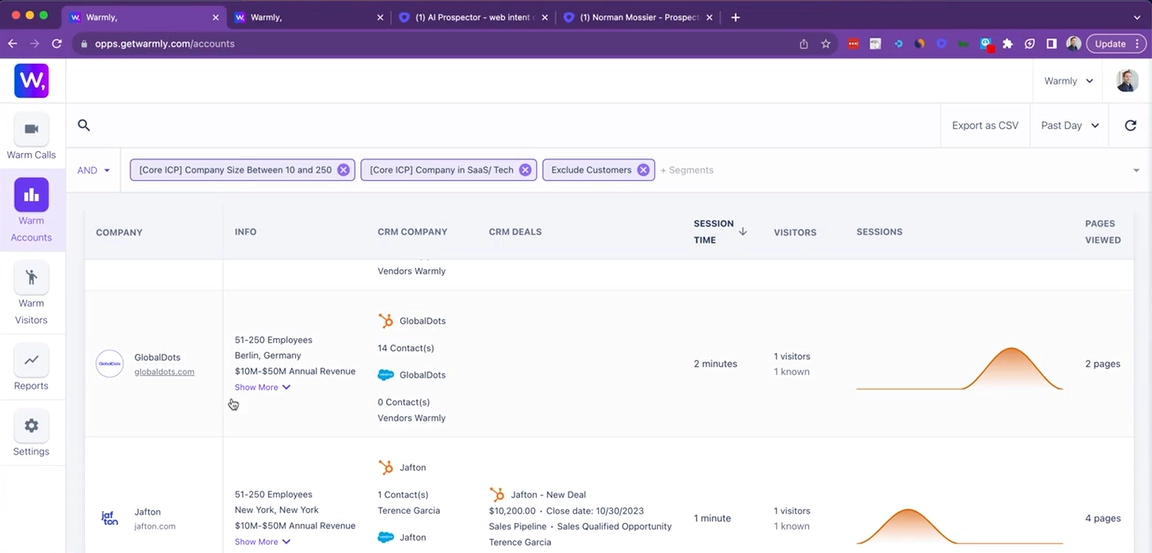


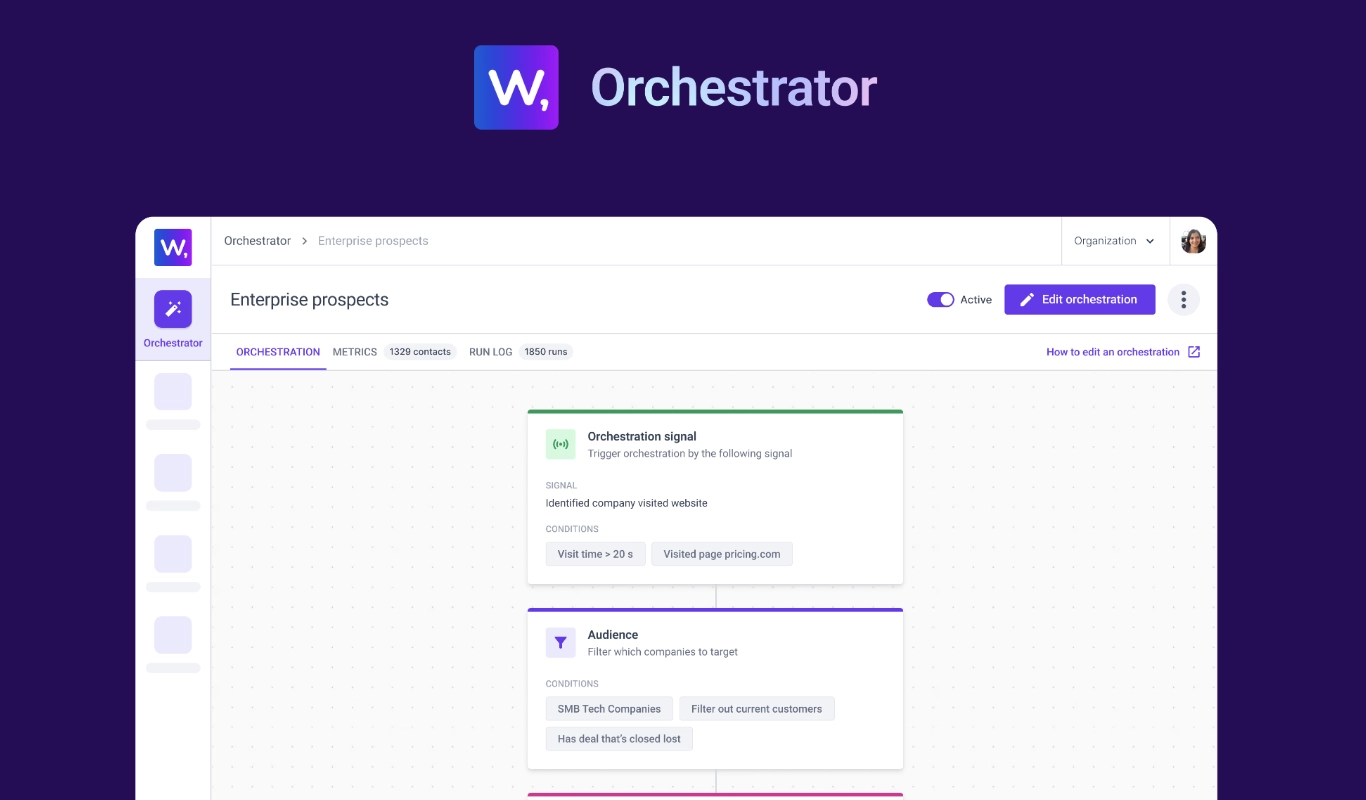

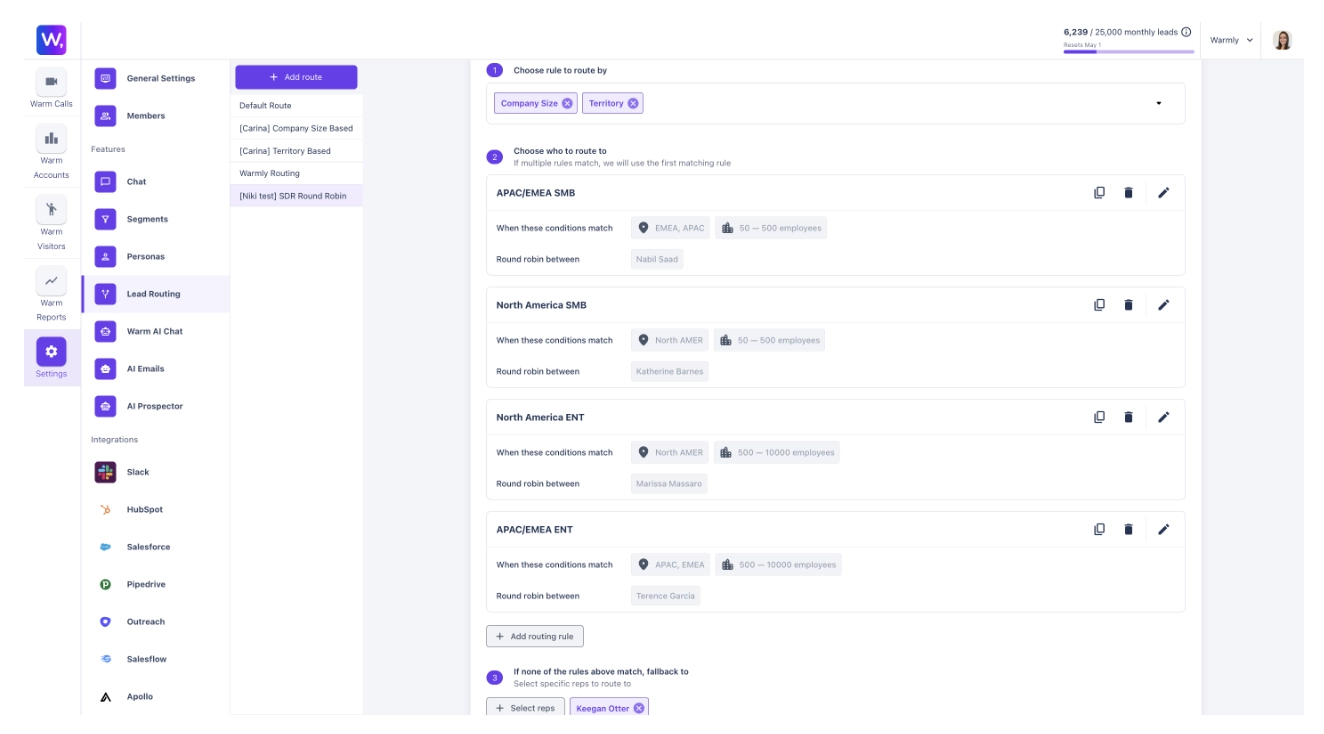

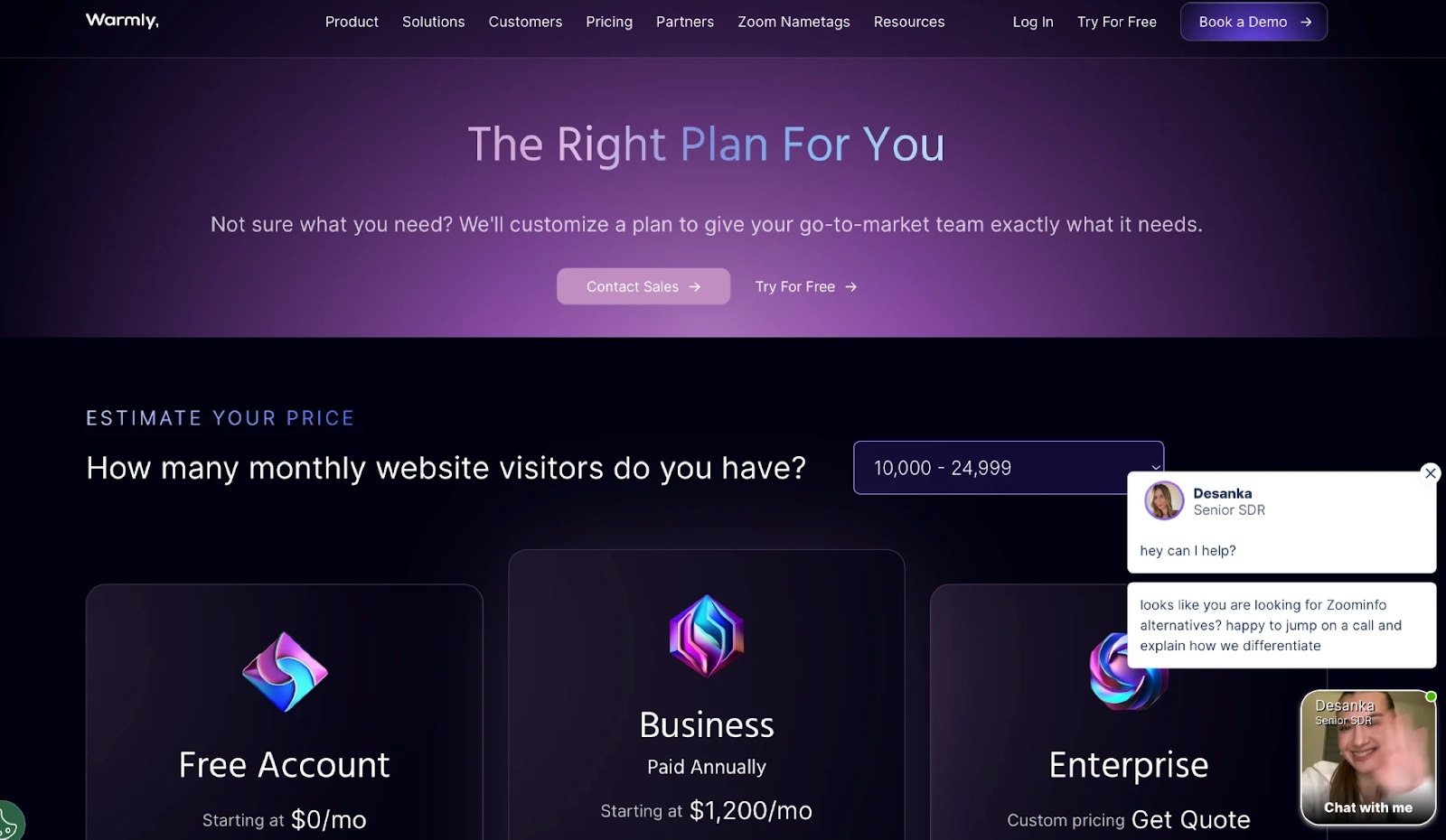


![Top 10 UnifyGTM Alternatives & Competitors [2026]](https://cdn.prod.website-files.com/6506fc5785bd592c468835e0/679677efb1c7a9e271d5e886_unifygtm_alternatives.webp)


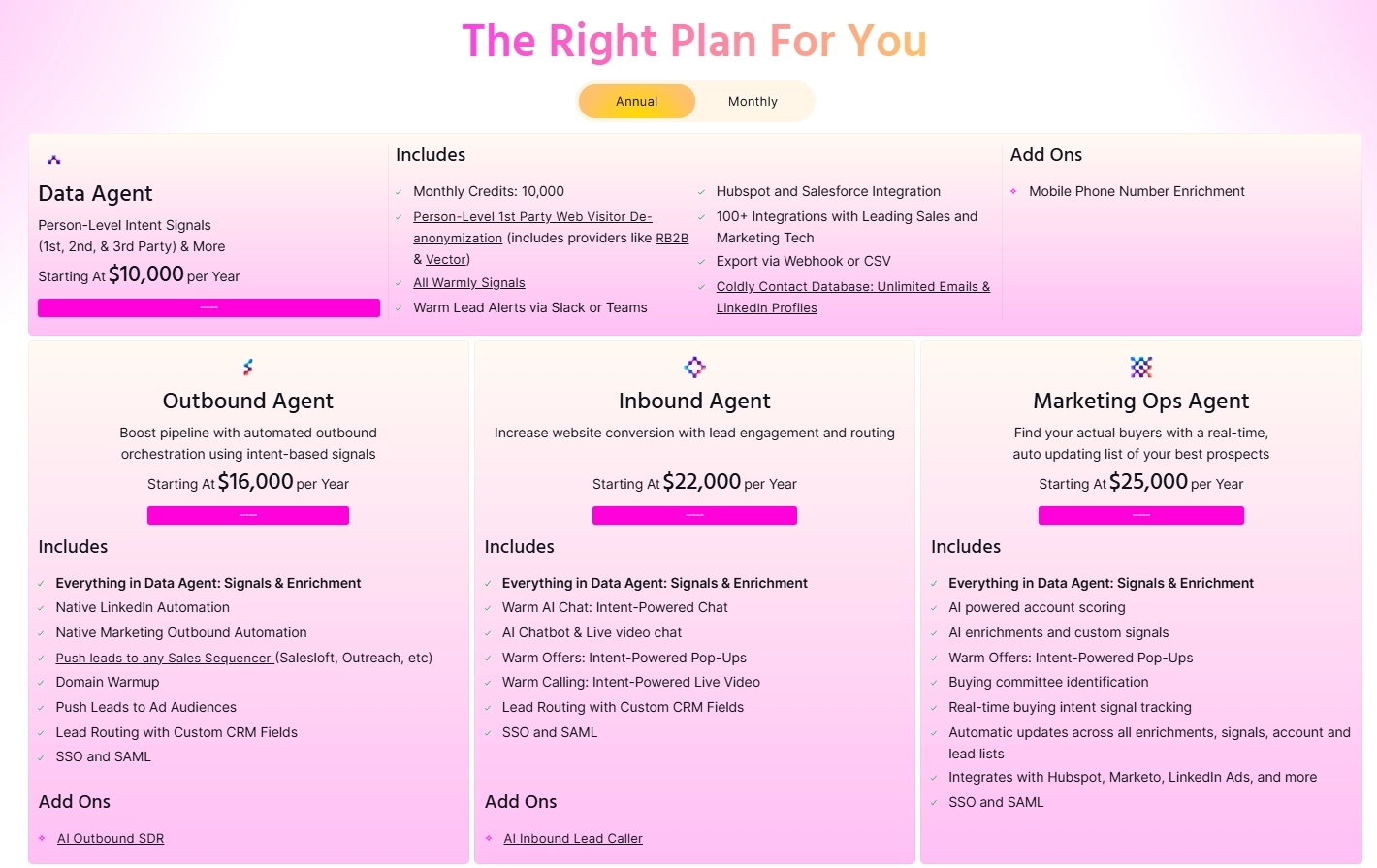


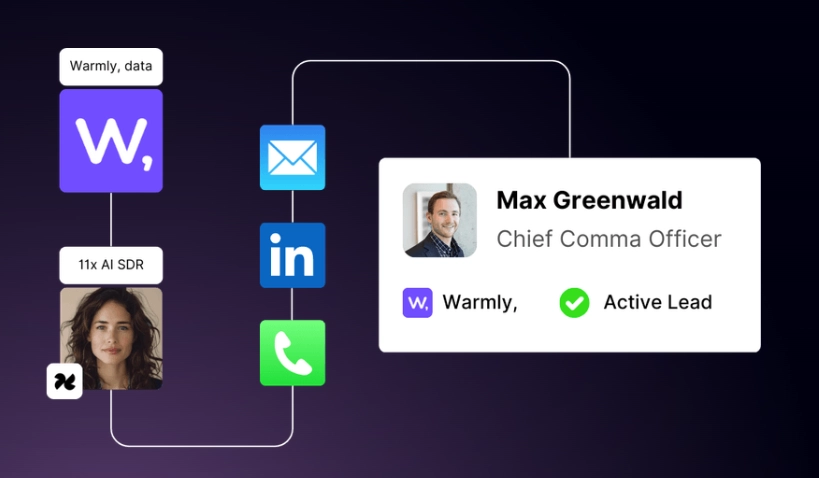


![Top 10 Clearbit Alternatives & Competitors [2026]](https://cdn.prod.website-files.com/6506fc5785bd592c468835e0/67b06ff5d5fd5c7a90e04c36_8d361888-12cf-4d85-b20b-586974fd4055.png)